
Last updated November 24, 2026
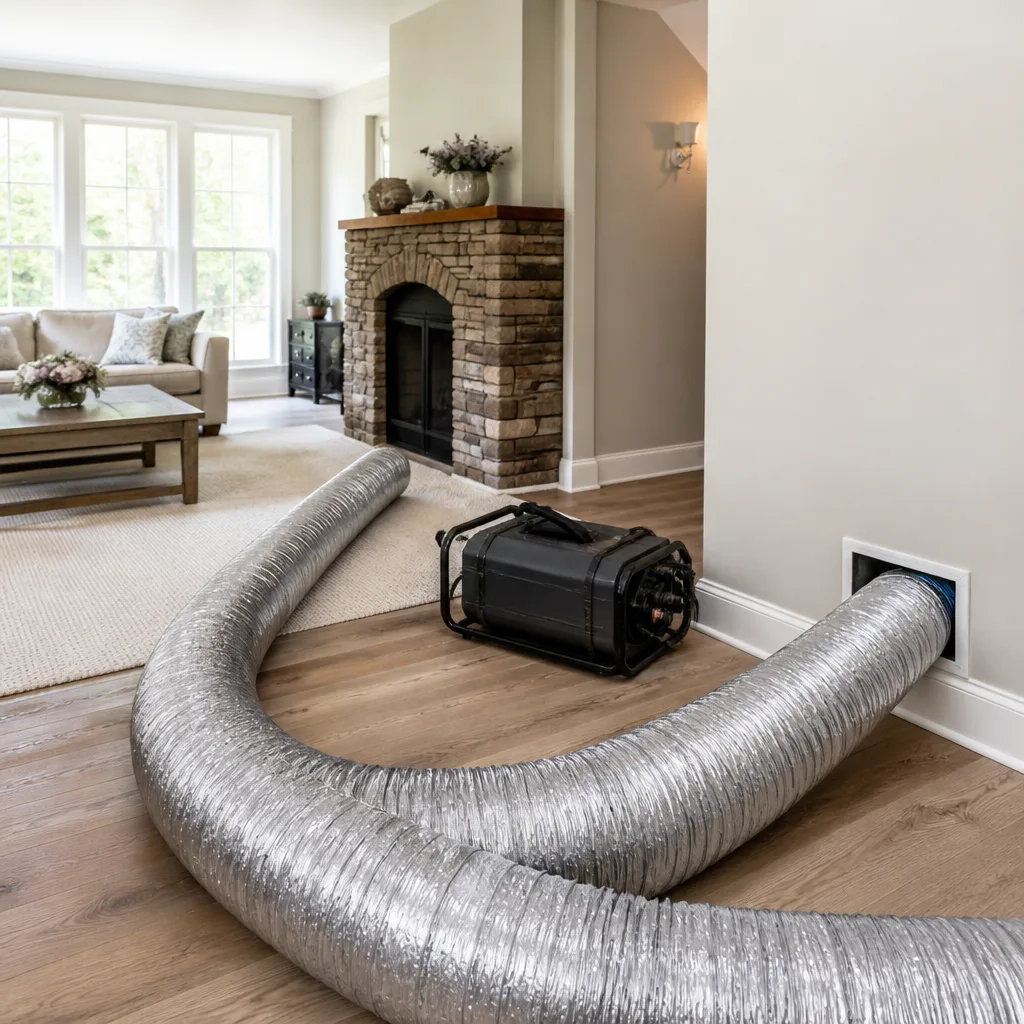 Whole-home duct cleaning
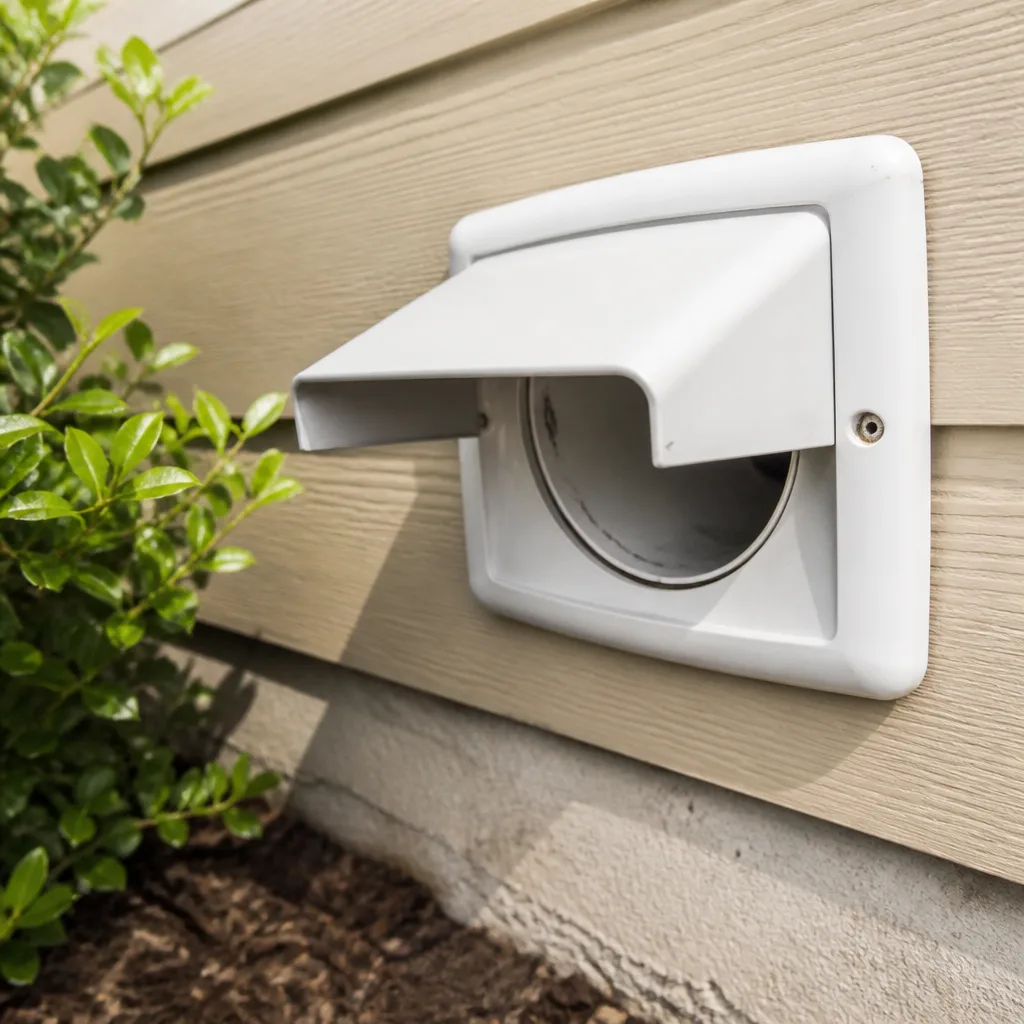 Dryer vent cleaning
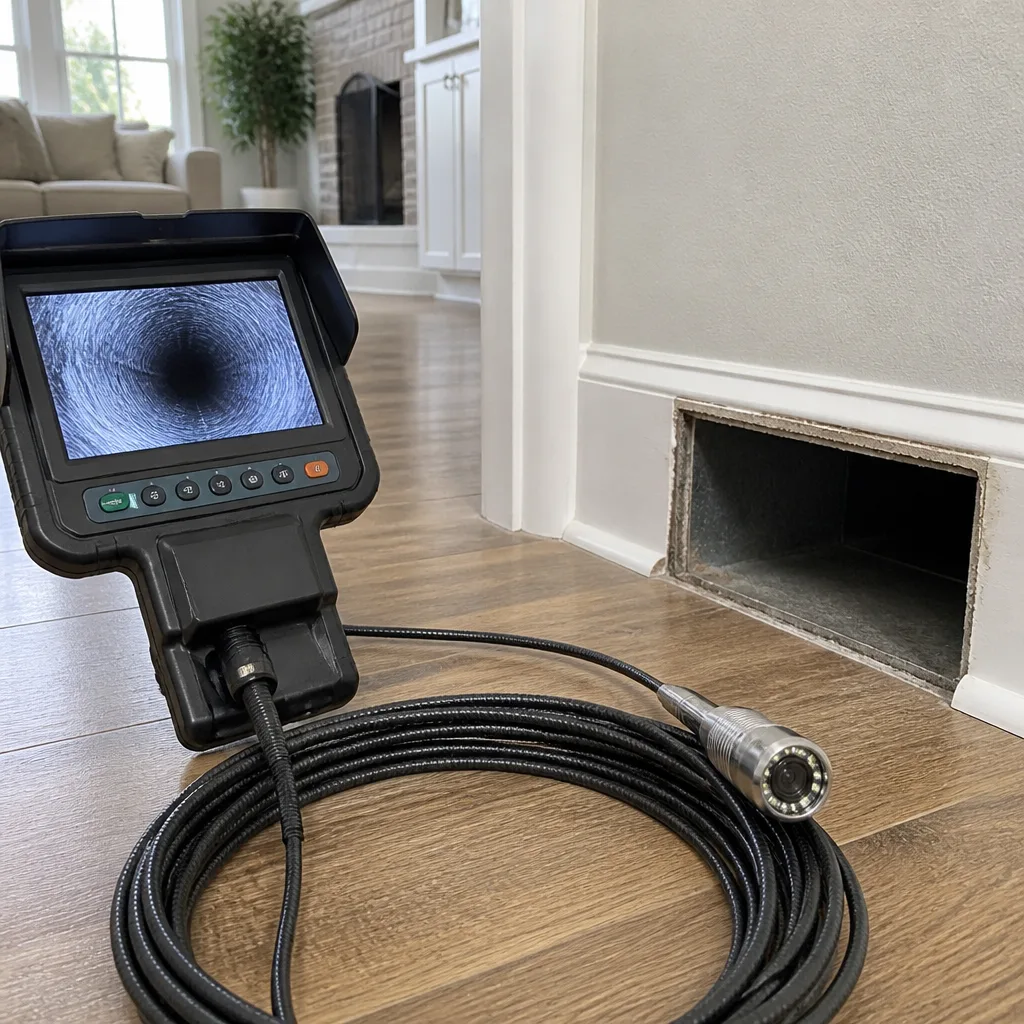 Camera inspection
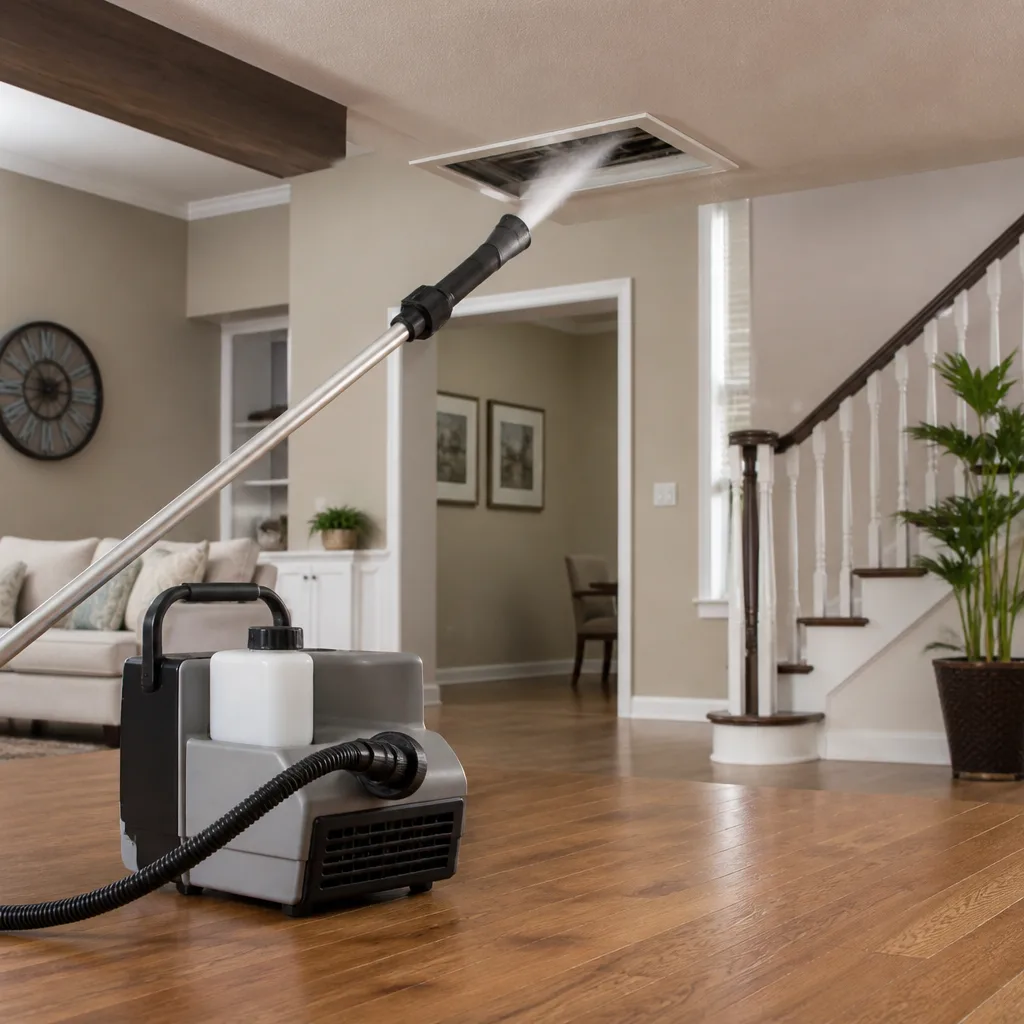 Sanitizing & deodorizing
Whole-system duct and dryer vent check with before-and-after photos - you see exactly what came out of your vents
That "$99 whole-house special" is a bait ad - the real number appears once they are in your hallway, or the "clean" is a shop-vac at the register. We photograph the inside of your ducts before and after instead.
Seasonal Air Duct Cleaning Care for Holladay: Year-Round Homeowner’s Guide
Most homeowners think duct cleaning runs on a calendar – every year, same month, done. In Holladay that approach misses the point. Your duct system doesn’t collect the same debris in April that it collects in December, and the air moving through it changes character with every season here: cottonwood fiber in early summer, wildfire smoke in August, dry furnace dust once the heat kicks on, and inversion-trapped pollutants all winter. A care guide keyed to those actual local events beats any fixed-date schedule. Below we walk through what each season puts into your ducts, what to inspect before it costs you efficiency, and how to build a maintenance log that ties action to real conditions in your home rather than to a date on the wall.
Quick Answer
Clean and inspect air ducts seasonally in Holladay, not on a fixed annual date: inspect coils and blower in spring before AC season, watch filter loading during summer smoke events, clean return ducts and inspect the heat exchanger in fall, and address humidity and filtration during winter inversion season. Two seasonal touchpoints (spring coil inspection and fall pre-heating inspection) plus whole-system cleaning every few years covers most homes in the Holladay area.
Styles & brands we work with
- Whole-home duct cleaning
- Dryer vent cleaning
- Camera inspection
- Sanitizing & deodorizing
Table of Contents
- Spring in Holladay: Cottonwood Season and the Coil Problem
- Summer: Wildfire Smoke and How It Behaves Inside Ducts
- Fall: Pre-Heating Inspection and Return-Duct Debris
- Winter: Inversion Season, Humidity, and CO Risk
- Building a 12-Month Maintenance Log
- Common Mistakes to Avoid
- When to Call a Professional
- Frequently Asked Questions
Spring in Holladay: Cottonwood Season and the Coil Problem
Late May and June are the most consequential weeks of the year for a duct system in Holladay. That’s when the cottonwood trees that line many of the streets through Old Town and the neighborhoods near the creeks release their fiber. If you’ve lived here through a June, you know the drifting white fluff that gathers in gutters, screens, and window sills. What many homeowners don’t realize is how fine that fiber actually is. It slips past a standard MERV-8 filter and lands on the A-frame evaporator coil inside your air handler, where it binds with condensation and forms a mat that reduces airflow across the coil.
By mid-July, that mat is a real efficiency problem. Your system runs longer, the coil struggles to shed heat, and the indoor temperature climbs even though the compressor is doing its job. The fix isn’t complicated, but it has to happen before the first cooling call of the season.
What to do in spring (April through June):
- Change the filter before the first warm week. If your home is under a cottonwood canopy, check it monthly through June rather than waiting for the 90-day reminder.
- Have the evaporator coil inspected before the AC runs hard. A technician with a borescope can see the coil face without disassembling the plenum. We use Rotobrush rotary-brush equipment to clean coils and duct interior surfaces when the buildup is significant.
- Clean or replace the filter grille on return intakes if you have them. That’s often where the visible cottonwood fiber accumulates first.
- Walk the exterior and clear the outdoor condenser of fiber and pollen before startup.
One thing to understand about spring in Holladay: pollen loading and fiber loading are two separate events. Pollen from neighborhood trees and grasses peaks around the same time, and while a good filter catches most of it, the fine fraction that reaches the coil is what starts the summer efficiency slide. If your filter housing is in a closet or hallway, look at the filter after two weeks in June. If it’s visibly gray or fuzzy, the coil behind it deserves a look.
Why coil inspection matters before the first cooling call
A dirty coil doesn’t announce itself. It shows up as longer runtimes, higher bills, and eventually a system that can’t hold the set temperature during a hot afternoon. Catching the buildup in late May is far cheaper than catching it in August when the coil is fully fouled. If the inspection turns up a coil that’s already compromised, we can address it during a seasonal visit rather than leaving you to find a second contractor.
Summer: Wildfire Smoke and How It Behaves Inside Ducts
Utah’s wildfire season has become a routine part of summer in Holladay, and that changes how duct systems behave. Smoke isn’t the same as household dust. It’s a combination of fine particulate matter, volatile organic compounds, and ash, and the particles in it are small enough to travel through most standard filters and settle deep inside the return system. Once there, they can be redistributed every time the system cycles.
Smoke particles behave differently than dust inside a duct for three reasons:
- Particle size. The finest fraction of smoke bypasses a MERV-8 filter. A MERV-13 rated filter catches more, but only if the system can handle the pressure drop.
- Stickiness. Smoke residue is mildly adhesive. It binds to duct interior walls and to the coil surface, where it accumulates faster than ordinary dust.
- Odor retention. Smoke odor lingers in the return system long after the smoke clears outside. That’s the residue clinging to interior surfaces, not a fresh infiltration.
What to do in summer (July through September):
- Check the filter during any smoke event and replace it if it looks loaded. A filter that’s already partly loaded will let smoke through sooner.
- Keep windows closed and run the system on recirculation during heavy smoke days. If you have an Aprilaire or Honeywell air cleaner installed, this is the season it earns its keep.
- Consider a mid-season filter upgrade if your system allows it, but leave enough capacity for airflow. A MERV-13 in a system designed for MERV-8 can starve the blower.
- If the smoke odor persists inside the home after an event, have the return ducts and coil inspected. That’s a sign the residue has settled and needs cleaning.
We use Abatement Technologies air-filtration equipment for this kind of work because smoke residue needs a higher level of capture than routine cleaning. The equipment is set up to draw and filter air at the duct opening while the system is cleaned, so what comes off the duct walls doesn’t end up in your living space.
When a mid-season filter upgrade makes sense
If this is the second summer your filter has loaded visibly gray within weeks, it’s worth talking about a higher-efficiency filter or a standalone air cleaner. The key question is whether your blower can handle the extra pressure drop. An HVAC technician can measure static pressure and tell you without guessing.
Fall: Pre-Heating Inspection and Return-Duct Debris
When the cooling season ends and the furnace takes over, a different set of problems appears. The most important fall inspection in Holladay is the one most homeowners skip: the blower wheel and the heat exchanger. Both sit inside the air handler, and both have been running hard all summer.
Here’s what accumulates over a cooling season in a typical Holladay home:
- Blower wheel: Dust, pollen, and fiber build up on the wheel’s fins, throwing it out of balance. A dirty blower wheel reduces airflow and adds noise. When we clean an HVAC unit, the wheel gets cleaned as part of the job.
- Return ducts: The return system draws in the dirtiest air in the house, and by October it has collected a season’s worth of dust, fiber, and smoke residue. Return duct cleaning matters more than most homeowners realize.
- Heat exchanger: Visible dust and soot on the exterior surfaces are one clue. But the more critical inspection is for cracks and rust, which requires a technician with the right tools to see what the eye can’t.
- Plenum insulation: Fiberglass liner that has deteriorated or separated can release fibers into the airstream. Loose liner is a duct repair job, not a cleaning job.
If the inspection turns up leaks at joints or seams, we address them under Duct Repair & Sealing rather than leaving them for another visit. Sealed ducts reduce the amount of conditioned air lost to the attic, the crawlspace, or the wall cavity, and that shows up in the first heating bill.
Heat exchanger inspection is not optional
A cracked heat exchanger can allow carbon monoxide into the conditioned airstream. That’s not a cleaning concern, it’s a safety concern, and no amount of duct cleaning substitutes for it. If you haven’t had the heat exchanger inspected before the heating season starts, put it on the list. A trained technician looks for cracks, rust streaks, and other signs of failure, and if the exchanger is compromised, the conversation moves to replacement, not to cleaning.
Winter: Inversion Season, Humidity, and CO Risk
Winter in Holladay means inversion season. Cold air settles into the valley and traps pollutants close to the ground, and that’s exactly when Holladay homeowners close windows, turn on the furnace, and reduce ventilation. The result is a house that recycles its own air for weeks at a time. Whatever is sitting in your ducts during inversion season gets cycled through the living space repeatedly.
Two issues matter most during winter:
Humidity management in sealed homes
When windows stay closed and the furnace runs, indoor humidity can drop into the 20s, which is low enough to dry out wood floors, cause joint gaps in cabinetry, and make respiratory irritation worse. Whole-home humidifiers from Aprilaire integrate with the HVAC system and keep indoor humidity in a healthier range. If you already have one, winter is when it needs attention: check the water panel, the drain line, and the humidistat. If you don’t, this is the season to talk about whether one belongs in your system.
Carbon monoxide risk from a compromised heat exchanger
We can’t say it often enough. If the heat exchanger has a crack, carbon monoxide enters the airstream and the system distributes it through the house. In a sealed winter home with the furnace running constantly, that’s the highest-risk scenario of the year. Have the heat exchanger inspected before the heating season, keep a working CO detector on every floor, and if you smell combustion byproducts or the detector sounds, shut the system down and call for service. We answer 24/7. Fast dispatch from 7am to 7pm.
Air quality during inversion
Inversion season is when a whole-home air cleaner pays off most. Trapped pollutants outside can’t be avoided by opening windows, and portable units only cover a single room. A properly sized Aprilaire or Honeywell air cleaner installed with the HVAC system gives you filtration where it counts. We carry and service these product lines, and we can talk through the sizing question with you during a seasonal cleaning visit.
Sanitizing after illness or a renovation
Winter is also when stagnant air and reduced ventilation can make sanitizing worth considering, especially after a household illness or a winter renovation. Our Air Quality & Sanitizing service uses Guardsman-grade sanitizing products applied to the duct interior surfaces. It’s not a substitute for cleaning, it’s an addition to the whole-system work we do.
Building a 12-Month Maintenance Log
A calendar reminder says “clean ducts in October.” A maintenance log says “the filter loaded in three weeks after the first cottonwood event, so the coil needs a look before July.” The log is the more useful document, and building one takes about twenty minutes.
What to record every time you touch the system:
- Date and observable condition. Not “changed filter” but “changed filter; visibly gray, some cottonwood fiber, last change four weeks ago.”
- Filter reading. The MERV rating, the size, and roughly how loaded it was on a scale you can recognize in your own handwriting. A simple visual scale (light / medium / heavy) works fine.
- Seasonal trigger noted. “First warm week” is a trigger. “Cottonwood fiber visible on the walk” is a trigger. “Smoke event reported in the valley” is a trigger. These are more useful than fixed dates because they follow the actual season.
- Service actions taken. Coil inspected, blower cleaned, return ducts cleaned, heat exchanger checked. Note who did the work and what they recommended.
- Any condition flagged for follow-up. A duct seam that looked loose, a humidifier panel that’s due, a filter size that’s hard to find.
Tie each seasonal action to an observable home condition rather than a date. Some examples:
- Late May: When cottonwood fiber is visibly airborne outside, check the filter weekly.
- Early July: When the AC first runs hard for several consecutive days, look at the filter and note whether the coil should be inspected.
- First smoke event of the summer: Check the filter and note the color; consider cleaning the return ducts if the odor persists.
- First cool morning in October: Before the furnace runs routinely, book the blower and heat exchanger inspection.
- Mid-December, during an inversion: Check the humidifier, verify the CO detectors, and consider whether the air cleaner filter needs replacing.
Review the log each season and adjust. After two or three years, you’ll know your own home’s pattern: which events load the filter, where the returns collect debris fastest, and whether the seasonal timing is on. A professional Holladay air duct cleaning visit is also a good time to update the log, because the technician can document what they found and what they cleaned.
See the difference
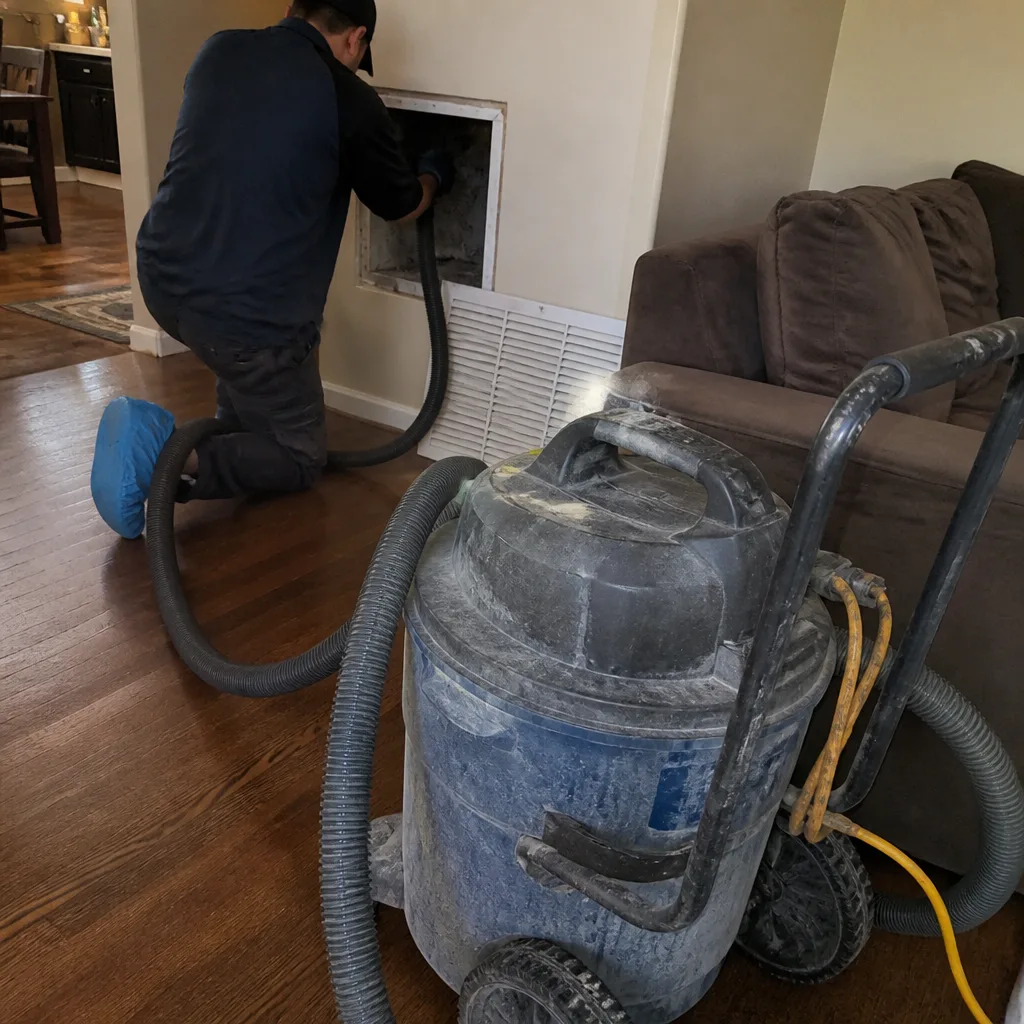 Before
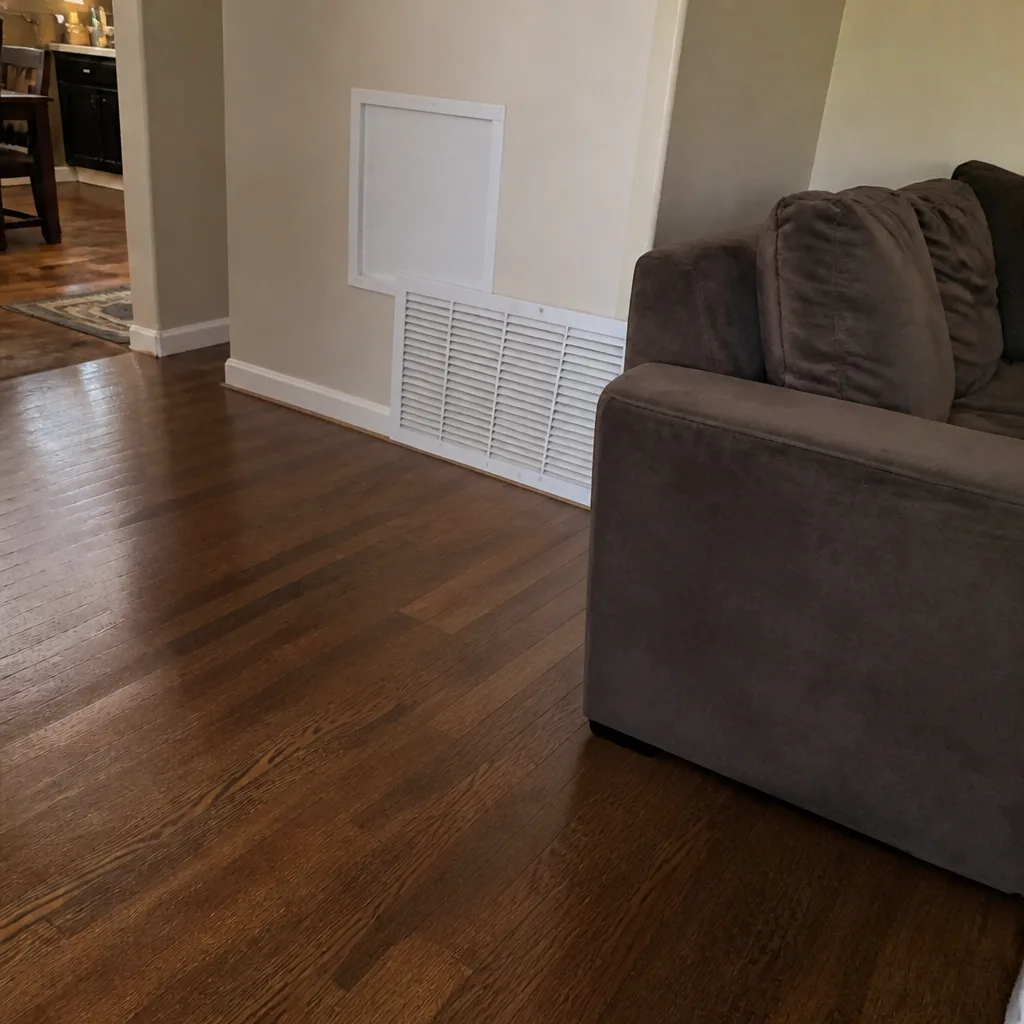 After
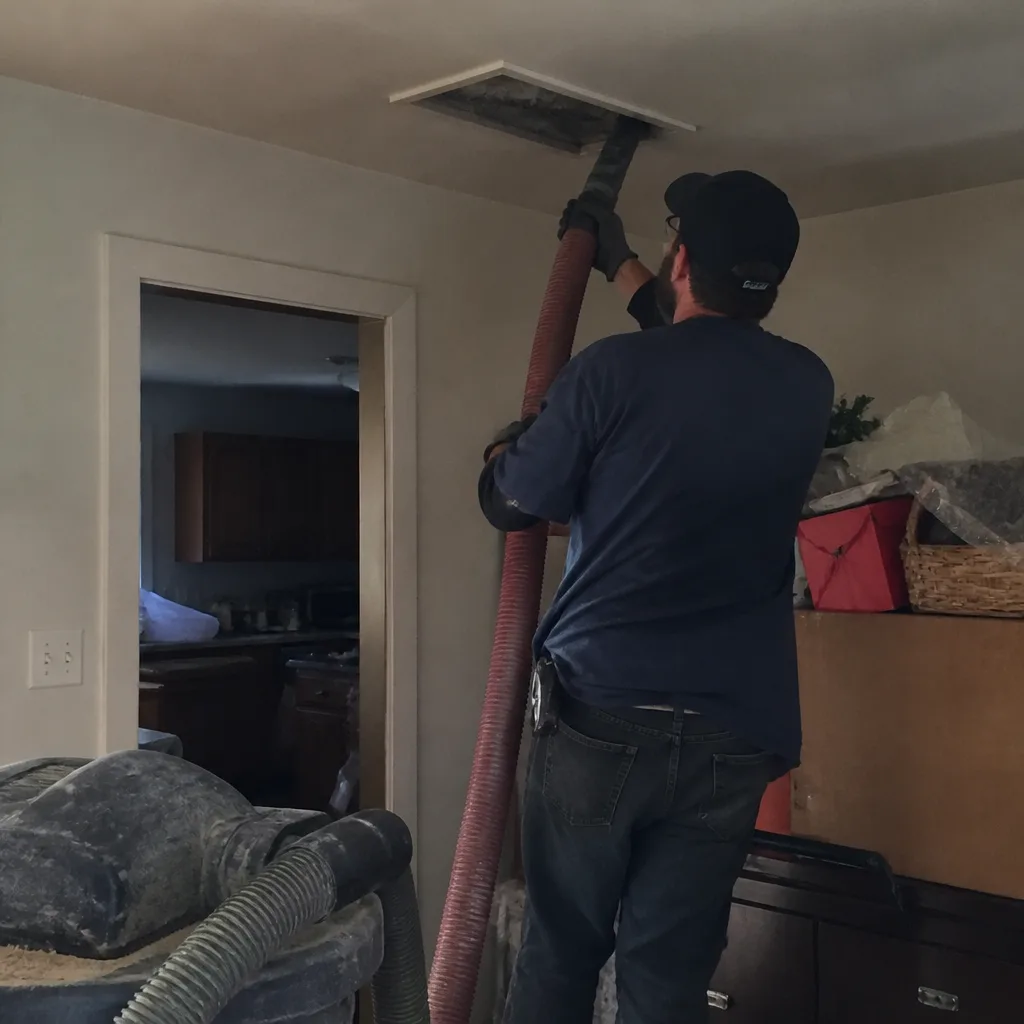 Before
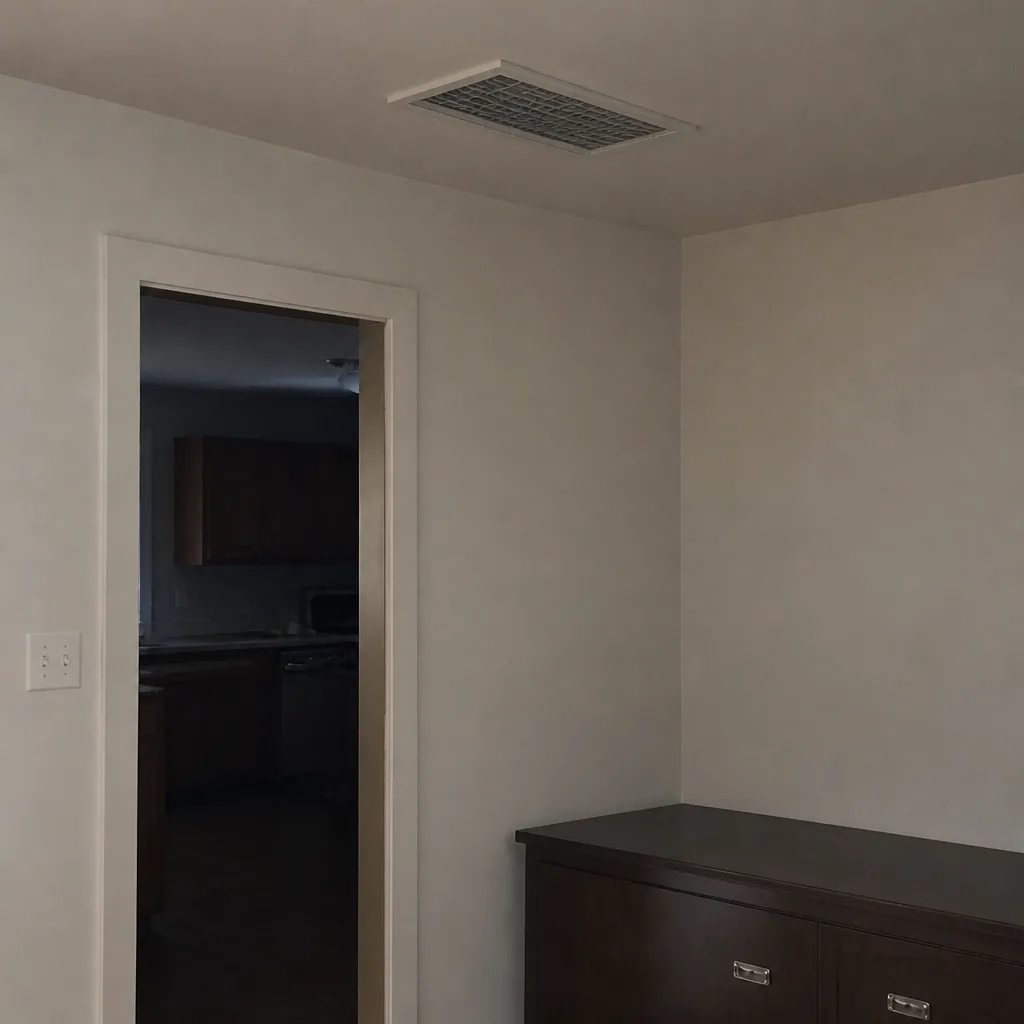 After
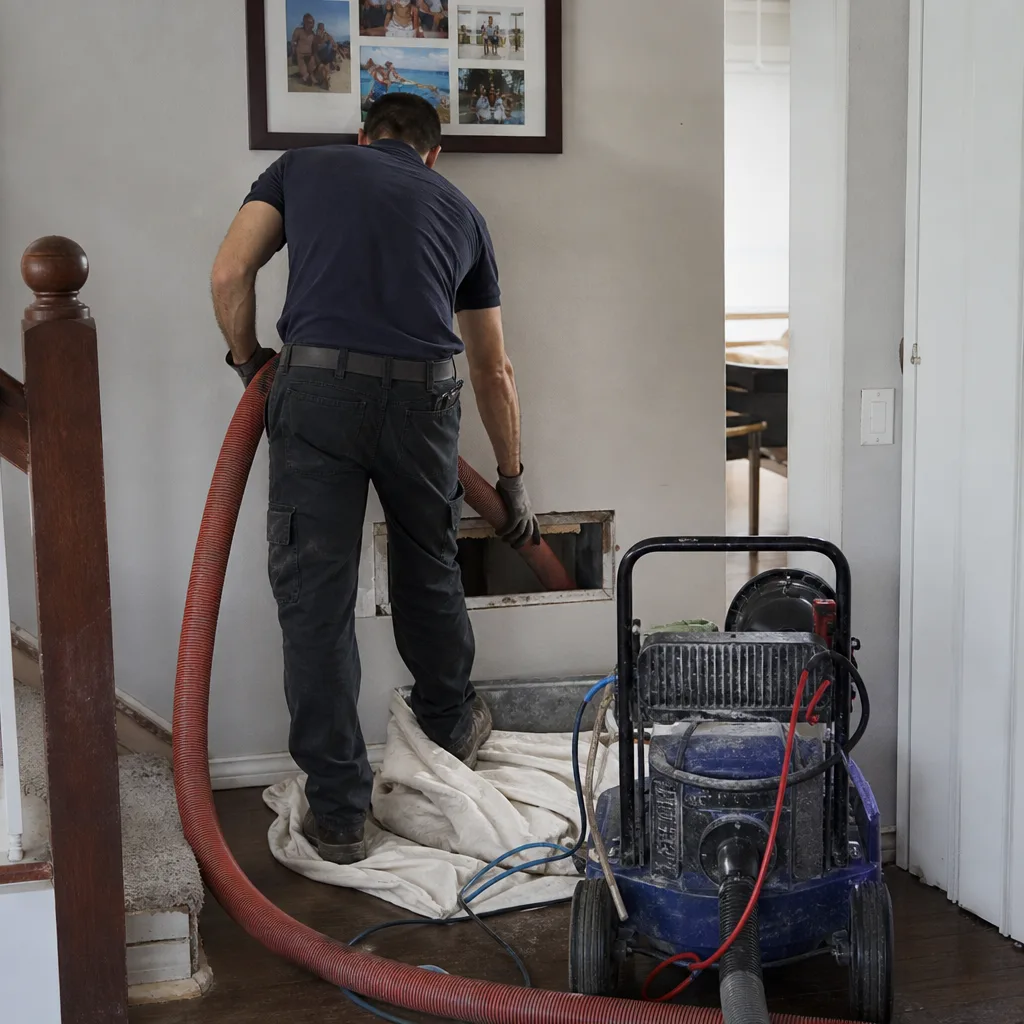 Before
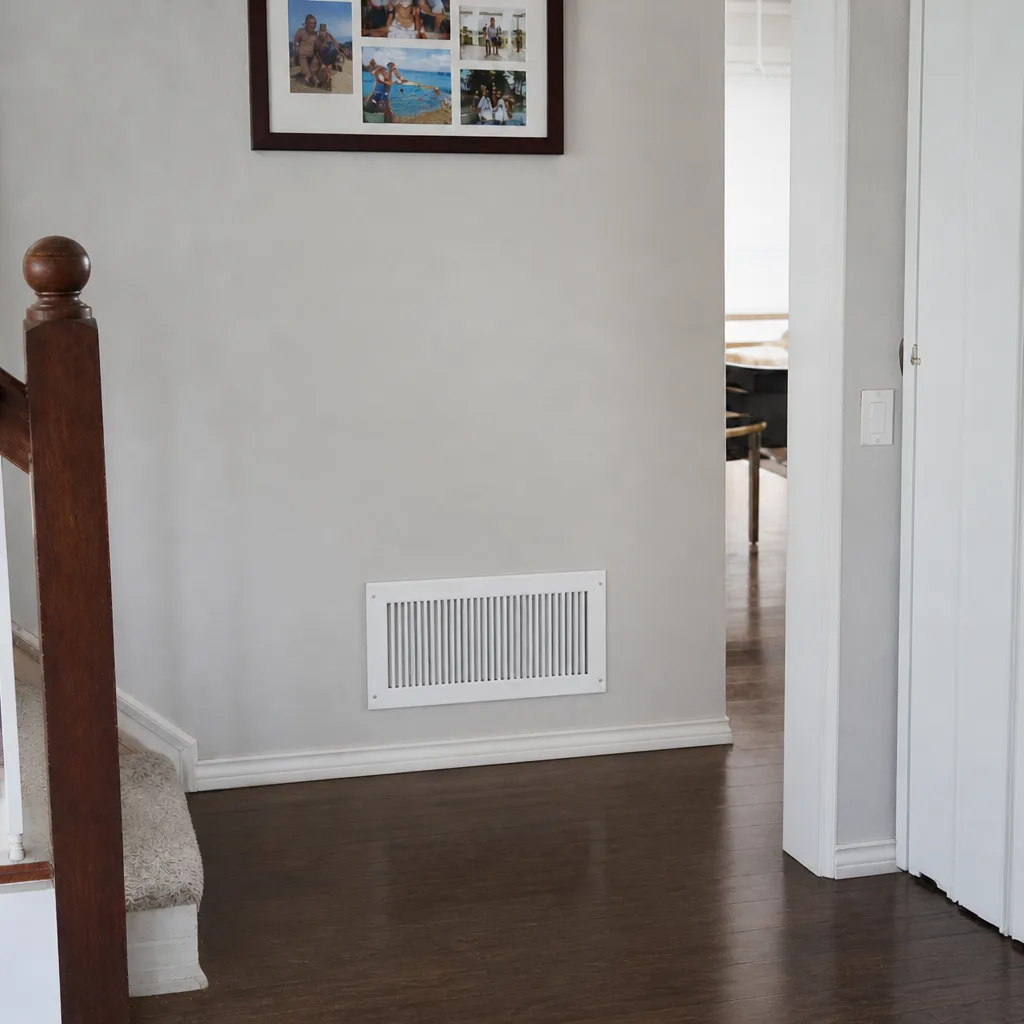 After
Common Mistakes to Avoid
- Following a fixed annual cleaning date regardless of season. In Holladay, cleaning in mid-winter misses the cottonwood season entirely; cleaning in late spring misses the pre-heating inspection. The seasonal triggers in this guide are more useful than a fixed date.
- Replacing the filter but never looking at the coil. A clean filter does nothing for a coil that’s already coated with fiber. If your home is under cottonwood trees, the coil deserves a look at least once a year before cooling season.
- Upgrading to the highest MERV filter your system can physically fit. A MERV-13 in a system designed for MERV-8 can starve the blower. If you want higher filtration, have your static pressure measured first.
- Assuming duct cleaning is enough before heating season. Cleaning doesn’t inspect the heat exchanger, and the heat exchanger is the safety item. Have it checked separately.
- Running the furnace when you don’t know the heat exchanger’s condition. If your home hasn’t had a heat exchanger inspection in the last two or three heating seasons, that’s a gap worth closing.
- Ignoring visible cottonwood fiber inside return grilles. That’s the loading point. If the grille is fuzzy, the return duct behind it is too.
- Using a rental shop vac or a “duct cleaning” offer that doesn’t use HEPA equipment. The wrong vacuum stirs up what should come out. Professional-grade rotary-brush and HEPA systems pull debris out; cheap equipment redistributes it.
When to Call a Professional
Some seasonal work belongs to the homeowner: changing filters, checking grilles, recording observations in the log. Other tasks genuinely need a technician with the right equipment. Call a professional if:
- Visible cottonwood fiber or heavy dark dust is layered inside the return ducts when you look at the grille
- The coil hasn’t been inspected in more than two cooling seasons and your system is running long cycles
- Smoke odor persists inside the house after a wildfire event clears
- The furnace has never had a heat exchanger inspection, or you’ve noticed a soot streak near the flue
- Duct seams are visibly loose or you see disconnected duct runs in the attic or crawlspace
- The dryer vent hasn’t been cleaned and lint is accumulating on the interior surround
- You’re planning a mid-season filter grade change and want to know whether the blower can handle it
Holladay Air Duct Cleaning offers free estimates in Holladay – call (844) 569-6978. We answer 24/7. Fast dispatch from 7am to 7pm, Sunday through Friday. Our technicians have up to 13 years of experience, and every visit is booked at a single flat price per system, agreed before any work starts, with before-and-after photos of your ducts.
Frequently Asked Questions
For most Holladay homes, professional duct cleaning every two to four years is the right cadence, with seasonal filter changes and inspections in between. Homes under cottonwood canopy, near major construction, or with pets or allergy sufferers may need cleaning more often. Book before heating season in October and before cooling season in May for the cleanest reset.
The cottonwood fiber that drifts through Holladay in late May and June is fine enough to pass through a standard MERV-8 filter and land on the evaporator coil. Once there, it binds with condensation and progressively blocks airflow across the coil, reducing efficiency through the summer. Checking the filter every week or two during that window and inspecting the coil before the first cooling run prevents most of the problem.
Yes. Smoke particles from Utah wildfire events are small enough that the finest fraction bypasses ordinary filters, and the residue is mildly adhesive. It settles on duct interior walls and the coil, then redistributes every time the system cycles. If smoke odor lingers after an event, cleaning the return system with HEPA-rated equipment removes the residue. Rotobrush rotary-brush systems and Abatement Technologies air-filtration equipment are what we use for this kind of work.
Only if your blower can handle the extra pressure drop. Higher MERV means better capture but more resistance; in systems not designed for it, that means reduced airflow and a starved blower. Have static pressure measured before upgrading. A properly sized Aprilaire or Honeywell air cleaner is often the more effective long-term answer.
The heat exchanger inspection. A cracked heat exchanger allows carbon monoxide into the airstream, and in winter – when windows stay closed and the furnace runs continuously – that’s the highest-risk scenario of the year. Have it inspected before the heating season, and keep a working CO detector on every floor.
Pricing is per system by written estimate, agreed before work starts, and we quote a flat price for the whole system rather than per vent. Cheaper quotes usually mean a smaller job: fewer vents cleaned, no coil inspection, no HEPA equipment, no photos. Ask what’s included before comparing numbers. Call (844) 569-6978 for a free estimate – we’ll walk through what your home actually needs this season.
Filter changes and visual inspection of grilles are homeowner-friendly. Coil inspection, blower cleaning, and heat exchanger checks are not – those need a technician with the right tools, and heat exchanger work in particular carries safety risk. If you’re comfortable with basic filter work, do that; book the professional side of the seasonal list.
Often yes, because the work is related. A single visit covers the ducts, the HVAC unit, the dryer vent, and any air quality treatment without multiple appointments. Scheduled maintenance that touches all of them is cheaper and more thorough than booking the items separately. See the wider air duct cleaning service scope, and ask about HVAC cleaning and dryer vent cleaning if those are part of this season’s list.
A Note on the Four Seasons and Your Ducts
Holladay’s seasons are distinct, and so are the things they put into your duct system. Spring is the coil; summer is the smoke; fall is the blower and the heat exchanger; winter is the humidity and the CO risk. Map a seasonal action to each one, keep a simple log of what you observed and what you did, and the maintenance stops feeling arbitrary. The work is per system, not per vent, and the price is set by a written estimate before anything starts.
The Bottom Line
Seasonal duct care in Holladay works best when it’s keyed to what the season actually does to your home – cottonwood in May and June, wildfire smoke in July and August, blower and heat exchanger inspections in October, humidity and CO checks in winter. Build a maintenance log that records observable conditions instead of fixed dates, do the homeowner-side checks yourself, and book the professional inspections before they become problems. If your home is in Holladay and you’re not sure when your ducts were last cleaned, we can walk through what your system needs. Call (844) 569-6978. We answer 24/7. Fast dispatch from 7am to 7pm, Sunday through Friday.
Written by the team at Holladay Air Duct Cleaning.