
Last updated November 24, 2026
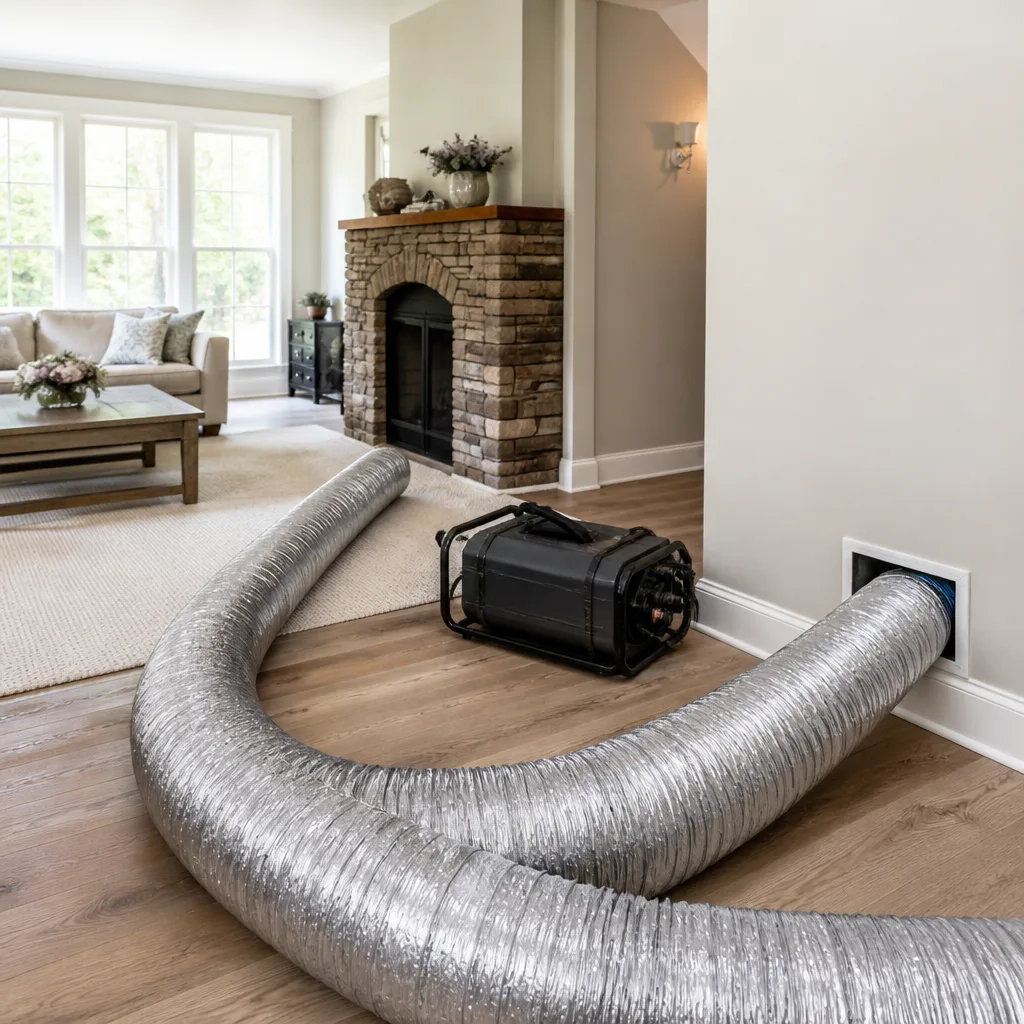 Whole-home duct cleaning
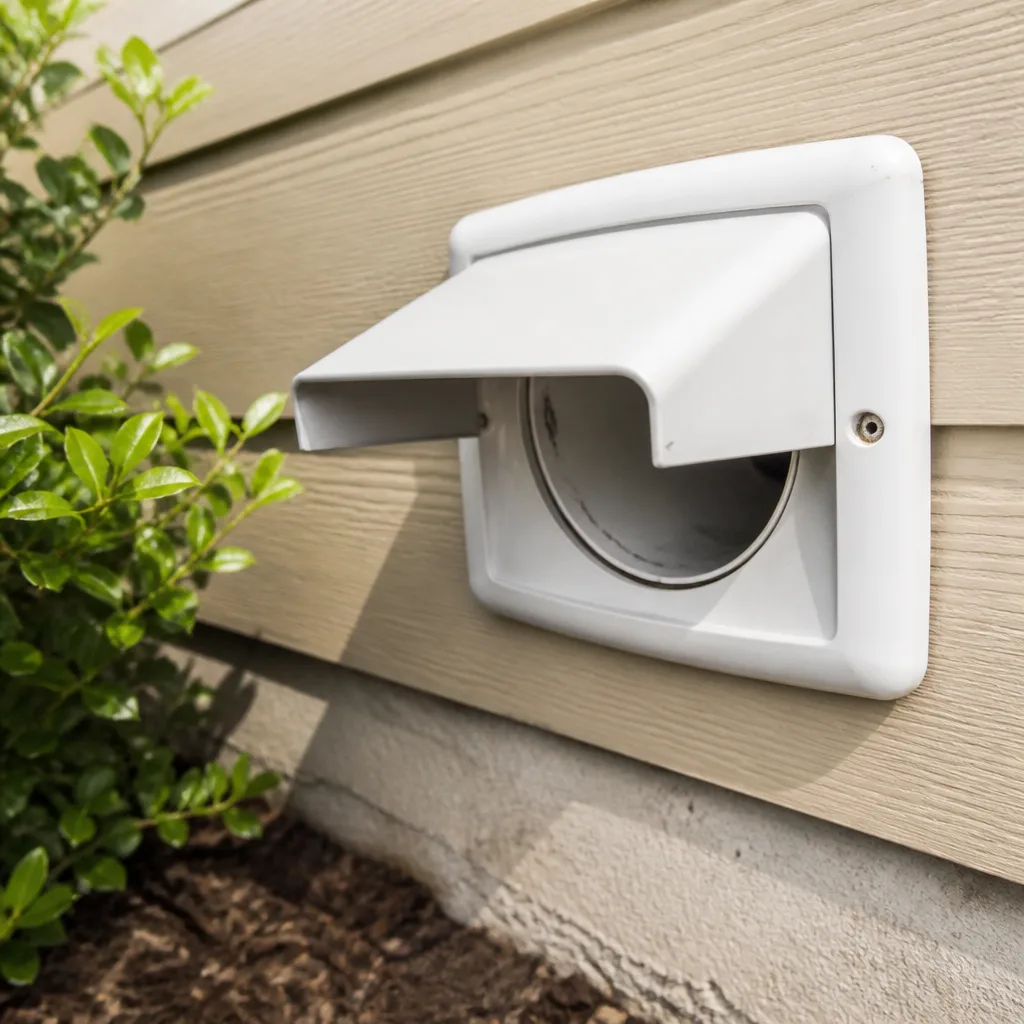 Dryer vent cleaning
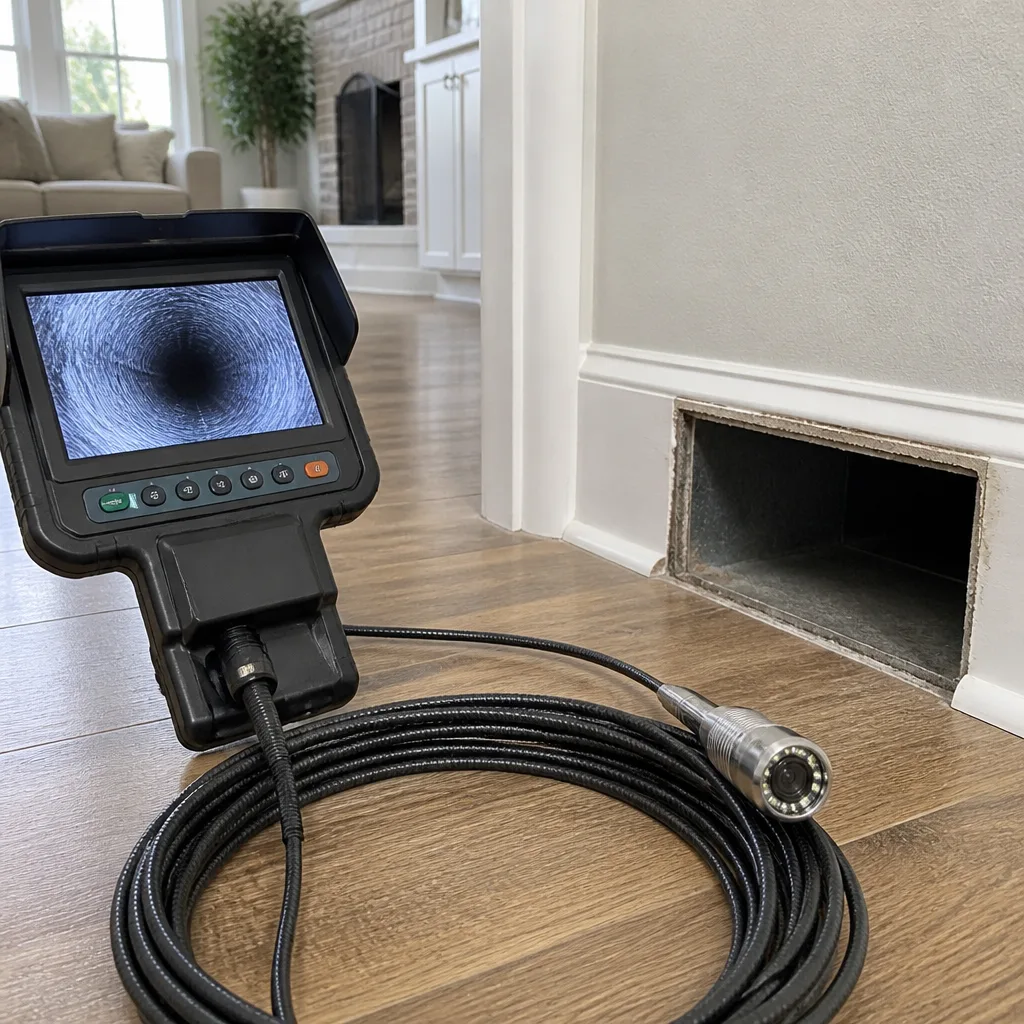 Camera inspection
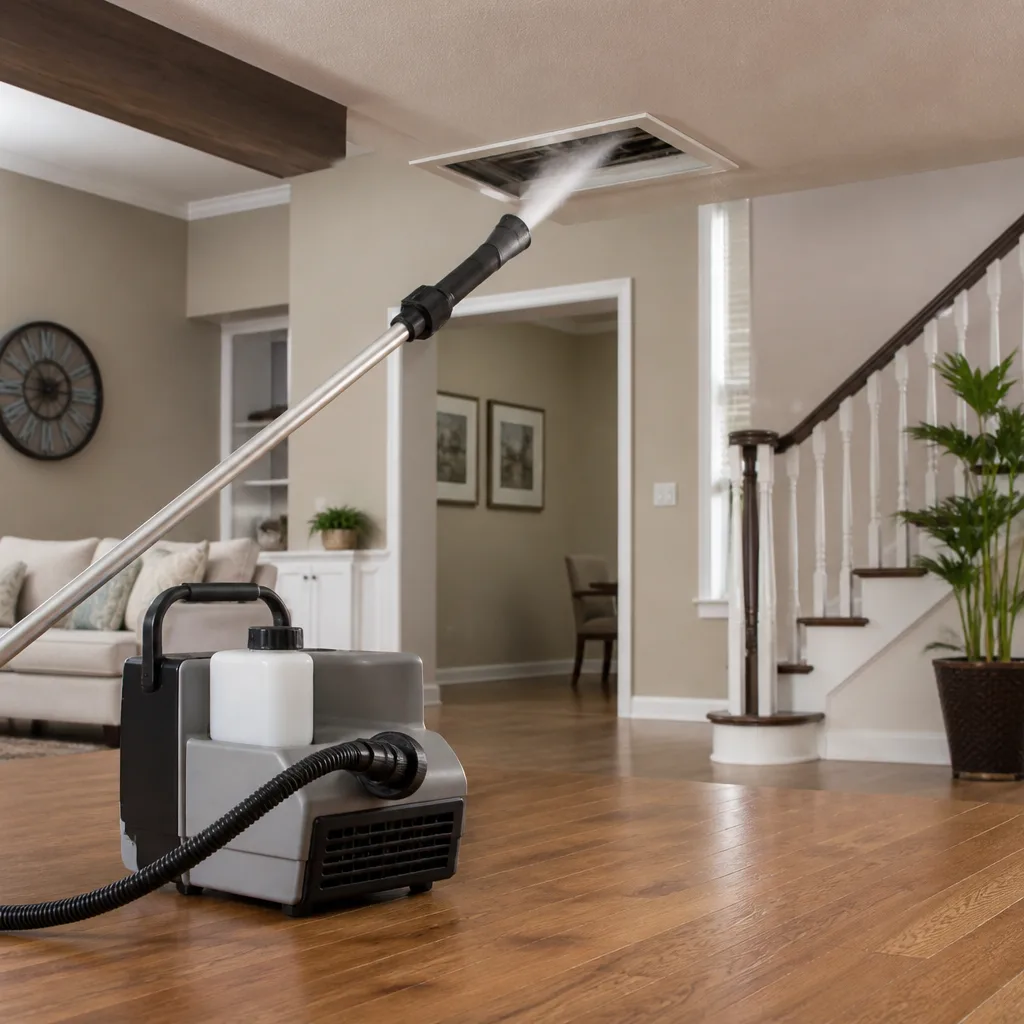 Sanitizing & deodorizing
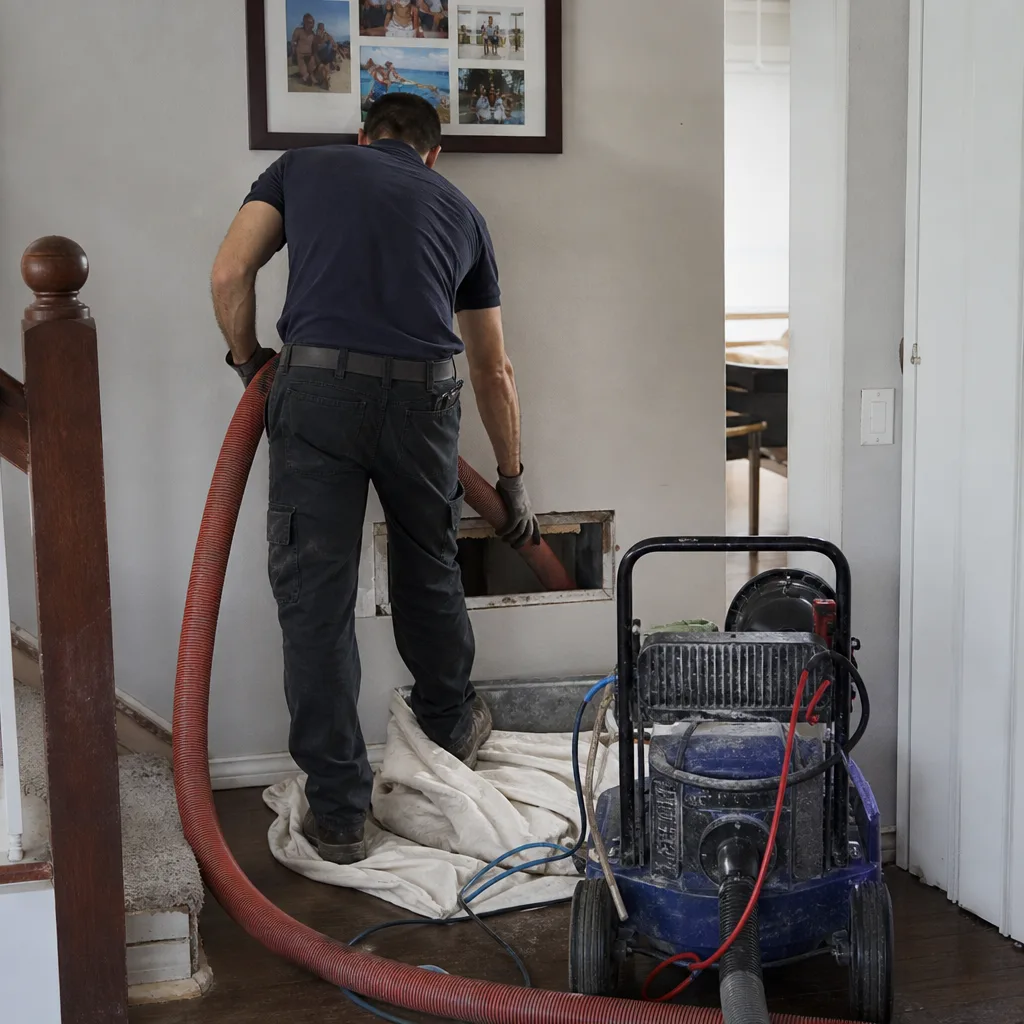
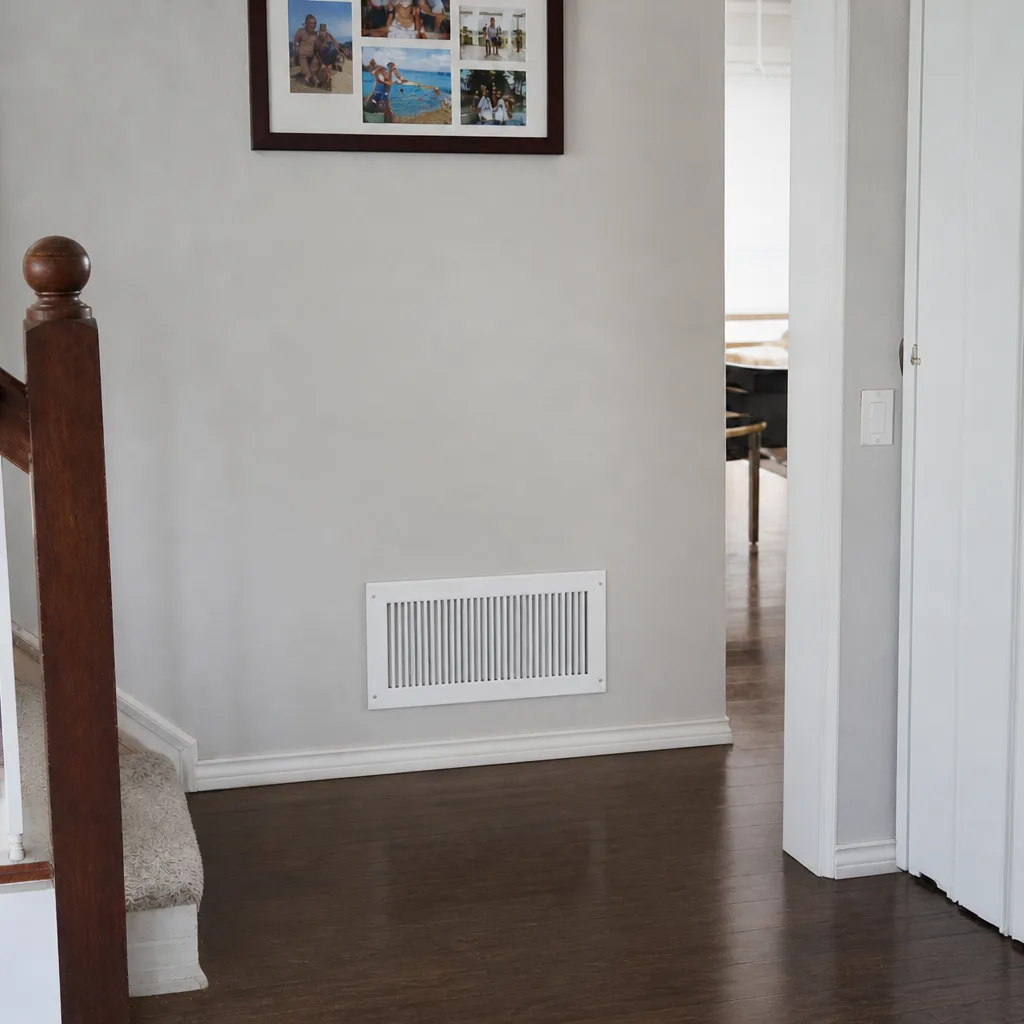
Whole-system duct and dryer vent check with before-and-after photos - you see exactly what came out of your vents
That "$99 whole-house special" is a bait ad - the real number appears once they are in your hallway, or the "clean" is a shop-vac at the register. We photograph the inside of your ducts before and after instead.
How to Hire an Air Duct Cleaning Contractor in Holladay: A Step-by-Step Guide
Most homeowners assume the person who shows up to clean their ducts had to earn a license to do it. In Utah, they didn’t. The state does not require a specialty license to run an air duct cleaning business, which means the entire job of vetting a contractor falls on you. Someone can buy a shop vacuum, print a stack of business cards, and knock on your door in Holladay tomorrow with no training at all. That isn’t a scare tactic; it’s the actual regulatory reality, and it’s why a guide like this exists. You’ll learn the exact questions to ask on the phone, how to read equipment lists, the phrases that signal a bait-and-switch, and what a professional walkthrough and post-job report should look like before you hand over a dime.
Quick Answer
To hire an air duct cleaning contractor in Holladay, verify their equipment and credentials before you book: ask whether they use truck-mounted or portable negative-pressure vacuum systems paired with rotary brush agitation, confirm the company is a current NADCA member, and request a written scope of work with before-photos during a pre-job walkthrough. Treat any quote built around a flat “whole house for $49” headline as a red flag, because the low teaser price is almost always followed by aggressive in-home upsells. A legitimate contractor will explain what they’ll do, show you the equipment, and put the price in writing before the work starts.
Styles & brands we work with
- Whole-home duct cleaning
- Dryer vent cleaning
- Camera inspection
- Sanitizing & deodorizing
Table of Contents
- Why Utah’s Licensing Gap Changes How You Vet
- What NADCA Certification Actually Means
- The Four Equipment Questions to Ask on the Phone
- Red-Flag Phrases and Pricing Structures
- What a Legitimate Pre-Job Walkthrough Looks Like
- How to Read Your Post-Job Report
- Holladay’s Climate and Home Types
- Why the Whole System Gets Attention, Not Just the Ducts
Why Utah’s Licensing Gap Changes How You Vet
In a state like Florida or Texas, air conditioning contractors work under specific licensing requirements that cover the related trade of duct work. Utah’s regulatory picture is lighter. There is no dedicated air duct cleaning license in the state, which means the barrier to entry for a new company is close to zero. That’s the single most important thing to understand before you start calling around Holladay. The lack of a license doesn’t make every operator a fraud, but it does mean you can’t lean on a license number as your safety net.
So what do you use instead? You lean on industry credentials that go beyond state requirements. The most recognizable is NADCA membership and its Air Systems Cleaning Specialist certification. You also lean on verifiable equipment. A contractor operating rotary-brush and HEPA-vacuum systems like Rotobrush or Nikro has made a real capital investment in their trade, and that investment tends to correlate with technicians who know what they’re doing. And you lean on transparency: a written scope, before-and-after photos, and a flat price per job.
In our experience working throughout the Holladay area, the gap between a well-equipped operator and a vacuum-and-hose operation is obvious the moment you see the truck arrive. A serious contractor brings negative-pressure vacuum equipment that pulls airborne debris out of the house instead of stirring it up. They bring rotary brush tools that agitate caked-on dust from the duct walls. And they’ll happily let you watch the process from a safe distance because they’re proud of what’s happening. If a contractor can’t tell you what equipment is on board before they arrive, that’s information worth having.
Utah’s Division of Consumer Protection fields complaints about home-services trades each year, and duct cleaning is a recurring category. The complaints almost always follow the same pattern: a low teaser price, an in-home “inspection” that finds problems, and a final bill many times the original quote. Understanding that pattern is your best defense, which is exactly what the next sections of this guide break down step by step.
What NADCA Certification Actually Means
NADCA stands for the National Air Duct Cleaners Association. It’s a trade organization, not a government agency, which sometimes confuses homeowners who expect a federal stamp of approval. Membership isn’t mandatory in any state. But it is the closest thing the industry has to a meaningful credential, and it applies real standards to how members operate.
When a company belongs to NADCA, it commits to a set of practices:
- Assessment before cleaning. NADCA standards require a proper inspection to establish whether cleaning is even necessary. A member shouldn’t sell you a cleaning on a house whose ducts are already clean.
- Source removal, not just surface vacuuming. The standard calls for the actual removal of contaminants from the system, not a quick pass with a hose.
- HVAC system protection. Members are required to protect the mechanical components of your heating and cooling unit during the work.
- Written documentation. A member should provide you with a scope of work and documentation of what was found and what was done.
- Trained technicians. The Air Systems Cleaning Specialist (ASCS) certification requires technicians to demonstrate competency in system inspection, contamination assessment, and safe cleaning technique.
Here’s how to verify membership in about three minutes. Visit the NADCA website and use its member directory search. Type in the company name and the city. If they appear, they’re a current member. If they claim membership but don’t appear, that’s a problem. Ask for the member number and check it against the directory. A company that genuinely belongs will give you the number without hesitating; a company that doesn’t will suddenly change the subject.
Our technicians have up to 13 years of experience, and in that time we’ve seen the difference NADCA standards make to a job. Member companies don’t skip steps because the standard is written into how they operate. A company with no association affiliation isn’t automatically a bad choice, but you should ask more questions and expect more documentation before letting them work in your Holladay home.
The Four Equipment Questions to Ask on the Phone
You don’t need special knowledge to ask these four questions. You just need to know what the answers should be. Ask them before you book, and write down what you’re told. Any hesitation or vague answer is a signal.
- “What kind of vacuum system do you use?” The right answer is a negative-pressure vacuum system, either truck-mounted or a high-powered portable HEPA unit. Negative pressure means the vacuum pulls dust out of the system and traps it rather than blowing it into your living space. Truck-mounted units are the most powerful option for larger homes. A portable HEPA vacuum with real filtration comes in second. A shop vac, or a claim that “the vacuum is on the truck” with no further detail, is a warning sign.
- “Do you use rotary brush agitation?” Dust clings to the walls of the duct. Vacuum pressure alone often won’t dislodge it. Rotary brush tools like those made by Rotobrush spin inside the duct to physically scrub the walls while the vacuum pulls the loosened debris out. If the answer is a plain no, the cleaning is surface-level at best.
- “What size system can your equipment handle?” This matters if your home is large or complex. A truck-mounted negative-pressure unit can handle a full whole-house system on a large Holladay property. A portable setup may need to be sized correctly and staged in multiple phases. Ask whether your square footage and unit arrangement is within the equipment’s rated capacity. If the answer is “we’ll make it work,” push for more detail.
- “What type of filtration does your vacuum use?” A HEPA filter traps particles that would otherwise pass through the exhaust and back into your air. Equipment from Nikro and Abatement Technologies is built with high-efficiency filtration in mind, and some systems are designed for remediation-grade air handling where particle counts are being actively managed. If the company can’t name the filtration class of their equipment, they don’t know their own tools.
The right answers boil down to this: professional-grade rotary agitation tools, a high-power negative-pressure vacuum with HEPA filtration, and equipment sized to match your home. Ask about each in plain terms. A confident contractor will answer without looking anything up, and in our experience the technicians who love their tools are only too happy to talk about them.
Red-Flag Phrases and Pricing Structures
There’s a particular vocabulary of the bait-and-switch operation, and once you’ve heard it, you’ll never miss it again. Here’s a red-flag script with the specific things to listen for.
- “Whole house for $49” or “$99.” A full duct cleaning in a Holladay home cannot be delivered for under a hundred dollars. The teaser price is there to get the truck to your door; the real invoice gets discovered once the technician is standing in your basement with a flashlight. That’s the model documented over and over in consumer complaints, and it’s why pricing should be set per job, in writing, before the work begins.
- “Your ducts have mold, we need to treat them today.” A legitimate contractor inspects, documents, writes up the findings, and lets you decide. Pressure to sign a treatment on the spot is a sales tactic, not a technical recommendation.
- “Our vacuum is on the truck” (and nothing else). Ask what kind. A truck-mounted system is a real piece of equipment with real specifications; “on the truck” alone could mean anything from a professional rig to a portable shop vac riding along.
- Coupons that require an in-home inspection to honor. The coupon is a lead generator. The “inspection” is a sales call. If the final price depends on what the technician tells you in your basement, the advertised price was never the price.
- No written scope of work before the start. A professional job starts with a piece of paper: what will be cleaned, how, what equipment will be used, and what it will cost. No paper, no job.
- No before-and-after photos. Photos are the easiest evidence to produce in this trade, because the change is visible. A contractor who doesn’t offer them either doesn’t have them or doesn’t want you looking too closely.
One more bright-line item: if a contractor won’t put it in writing, they’re not a contractor you want in your ductwork. A written estimate that sets a flat price for the job is a two-way commitment. It protects you from an invoice surprise, and it protects the contractor from scope creep. Ask for one before you book, and expect to receive it.
What a Legitimate Pre-Job Walkthrough Looks Like
The walkthrough is the moment that separates a professional operation from a hose-and-a-vacuum crew. It should happen the same day as the cleaning, before any equipment is brought inside. Here’s the sequence to expect.
- Finding access points. A technician who knows ductwork can locate every access point in a system without cutting indiscriminately. They’ll point them out to you, and they’ll explain where they’re going to open the system and how they’ll close it back up.
- Inspecting before touching. The technician looks into at least one supply run and one return run, and examines the air handler and filter area. This is how they assess contamination and confirm cleaning is warranted.
- Photographing. Before-photos are taken during the walkthrough. If they offer, look at them. The photos document the starting condition, which is the basis for the post-job comparison.
- Written scope of work. The scope should spell out which systems will be cleaned, the equipment to be used, any repair or sealing work identified during inspection, and the flat price. You read it and agree to it before work starts.
- Explaining what will happen. You should know the sequence of the visit before it happens: roughly how long it takes, where the equipment will sit, and how they’ll protect your floors and HVAC unit.
What you should not see: a technician who shows up with a hose, no scope, no photos, and no inspection, and immediately begins work. That contractor is cleaning something, but not the way a professional operation would. In our experience, homeowners who get the walkthrough end up feeling more confident, not less, because the process becomes visible and understandable.
If you want to see what a professional-grade process looks like across the broader service list, our Holladay Air Duct Cleaning page is a reasonable starting point. The key detail is the equipment list: professional-grade rotary brush and HEPA vacuum systems, not rental-counter gear.
How to Read Your Post-Job Report
When the work is done, you should receive something tangible. Not a verbal “looks good in there,” but a report that documents what was found, what was done, and what it looked like after. Here’s what to look for.
- Before-and-after photos of your own ducts. This is the single most important document in the job. The technician photographs the same duct access points before cleaning and after. You compare the images. If the “after” photo isn’t actually after, well, it usually looks like it. The change should be obvious.
- Written findings. Notes on the condition of the system: what the tech found, any loose joints or damaged or disconnected runs, whether there was visible contamination, and whether any part of the system was inaccessible. A written finding is what gives you something to act on after the visit.
- Particle counts or air sampling data. If the job involved remediation-grade air filtration equipment, some contractors will run air sampling before and after the cleaning and report the numbers. This is a higher tier of documentation, and it’s not standard for every job, but it’s the standard a company with Abatement Technologies-type equipment can provide when it’s warranted.
- Recommendations for what comes next. A professional report will note whether you should consider additional services (duct sealing where leaks were found, HVAC coil cleaning, or an air quality treatment). Recommendations should be written, follow-up, not hard-sold on the spot.
A company that does all of this is a company prepared to stand behind its work. A company that hands you an invoice and walks to the truck without photos or findings is telling you exactly how much they value their own work.
Post-job documentation is also the moment where the difference between a cleaning-only contractor and a full-system operator becomes clear. When a technician finds a leak at a joint, the question is whether someone has to come back out or whether it can be resolved on the same visit. That’s a scheduling convenience, but it’s also an accountability one, because the person who found the problem is the person who fixes it.
Holladay’s Climate and Home Types
Holladay sits at the base of the Wasatch Range, and that geography shapes how ductwork lives in local homes. Winters bring cold, dry air and heavy heating-season run time. Hot, dry summers push the air conditioning hard. In the shoulder months, wind-blown dust from the foothills finds its way into the outdoor air, and whatever gets pulled into the return is going to end up going through the filter and settling somewhere in the system. In our experience, that seasonal pattern means Holladay systems tend to accumulate fine dust on a predictable schedule.
Home types matter too. Older homes around Holladay often have ductwork that was added in phases: an addition here, a converted finished basement there, a system extended rather than redesigned. Those systems commonly have more joints, more turns, and more spots where a loose connection can let dust escape or pull unconditioned air in from an unconditioned space. Newer builds tend to have more uniform ductwork, but they aren’t exempt, because builder-grade flex duct is prone to sags where dust collects.
The practical upshot: your home’s needs are specific, and so is the choice of contractor. A one-size-fits-all cleaning price from a coupon flyer was never designed to accommodate the differences between a 1950s ranch house and a recently built home in Holladay. A contractor who walks the system, checks the equipment, and writes a scope based on what they actually found is the one to hire. Anything less is guesswork applied to a system you’ll be breathing through all winter.
Air quality in Holladay also differs meaningfully by neighborhood and elevation. Homes on the higher benches see different exterior air loads than homes closer to the valley floor, and homes with mature landscaping and leaf litter can pull more pollen and organic matter into the return. A contractor who’s worked in the area knows what to look for.
When a cleaning turns up a loose joint or a disconnected run, the fix belongs to air duct cleaning and repair as one visit rather than two. That’s the practical case for choosing a contractor who can repair and seal, not just clean.
Why the Whole System Gets Attention, Not Just the Ducts
A serious duct cleaning contractor treats the HVAC system as a whole. That means three connected parts of your home’s air pathway get attention in the same visit.
The first is the ductwork itself, from the supply and return runs through to the boot at each register. The second is the air handler and mechanical components of the HVAC unit, including the coil and the blower, which is where dust accumulates and restricts airflow. The third is the point most often overlooked: the dryer vent, which is a separate exhaust pathway with its own set of risks. A blocked dryer vent restricts airflow and traps lint against the heating element. That’s a fire-risk condition, and it’s a reason dryer vent cleaning belongs in the same conversation as duct cleaning.
When a contractor can handle all three, you avoid the problem of finding one vendor for the ducts, another for the HVAC, and a third for the dryer vent, each with their own scheduling headache. A coordinated HVAC cleaning plus duct cleaning visit gets the whole system addressed at once, and lets the technician see how the pieces interact. A dust problem that starts at the HVAC unit ends in the ducts, and vice versa. Treating them separately makes it easier to miss the source.
Beyond cleaning and repair, the last piece is air quality treatment. Sanitizing products applied correctly by a technician using equipment appropriate to the job can reduce microbial load on surfaces the air passes over. Products from Aprilaire, Honeywell, and Guardsman are in wide professional use, and a contractor familiar with those product lines can tell you which treatment makes sense for your home rather than upselling a generic package. Better air starts at the source, and in a whole-system cleaning the source is where a competent contractor starts looking.
Common Mistakes to Avoid
- Booking on a coupon headline. The flat price in the flyer is an invitation, not an estimate. Ask what the final price will be for your home and get it in writing before anyone arrives.
- Never asking about equipment. If you don’t ask what vacuum and rotary brush tools the contractor uses, you’ll find out the hard way when a shop vac shows up at the front door. The four equipment questions take five minutes on the phone.
- Skipping the NADCA directory check. It takes about three minutes to confirm membership, and it separates companies that belong to a standards organization from companies that don’t. Fewer than a dozen companies in Salt Lake County hold membership, so the check distinguishes quickly.
- Letting work start without a written scope. Even if you like the tech and the price sounds reasonable, ask for the scope of work in writing. A verbal scope is unenforceable and impossible to compare against the actual job.
- Skipping the post-job photos. If the contractor doesn’t offer before-and-after photos, ask for them. This is the receipt for the job, and it’s how you know what happened inside your ductwork.
- Letting a technician choose a treatment for you without documentation. A sanitizing treatment, a duct sealing recommendation, or a new filter upgrade should come with a written explanation of what it does and what it costs. Recommendations are fine; pressure to sign is not.
- Assuming the ducts alone are the whole job. If the HVAC unit and dryer vent aren’t on the visit list, the system is only partly addressed. Ask about the whole air pathway in the same conversation.
See the difference
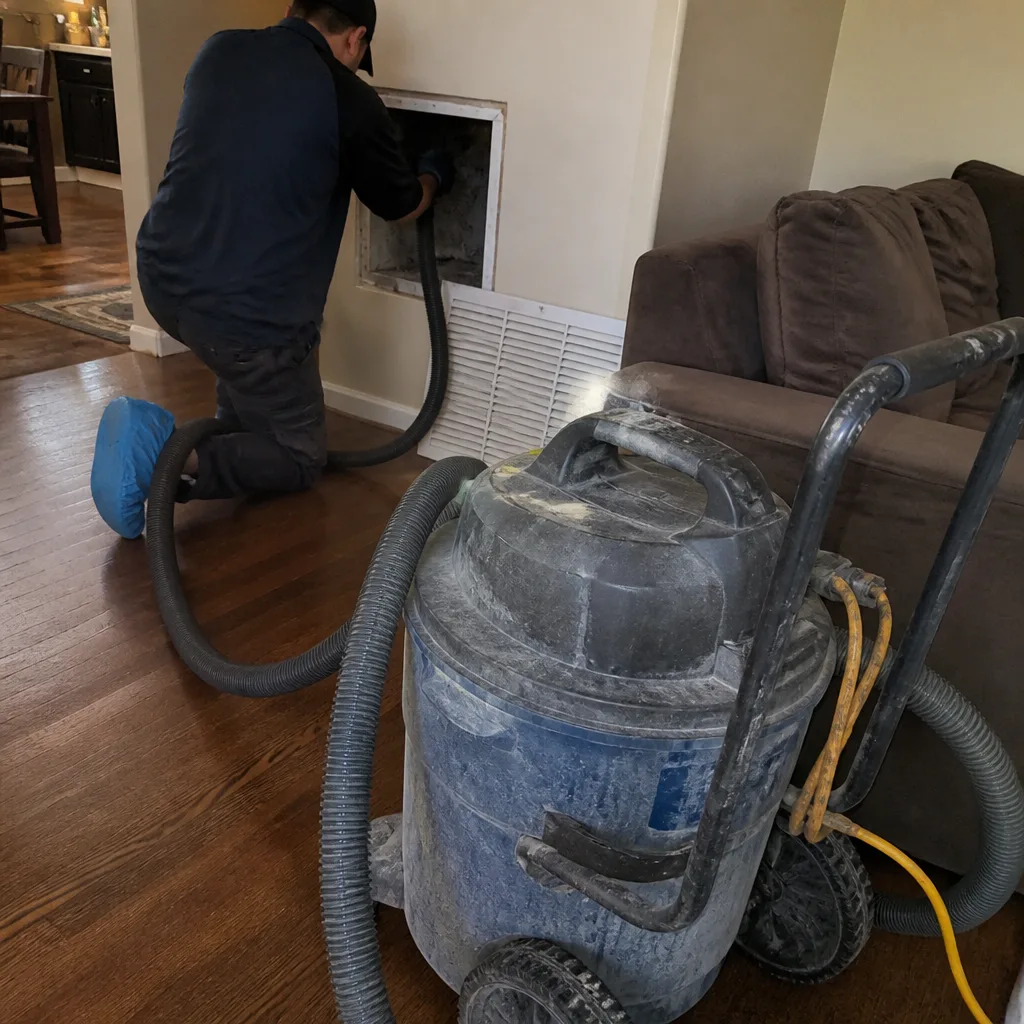 Before
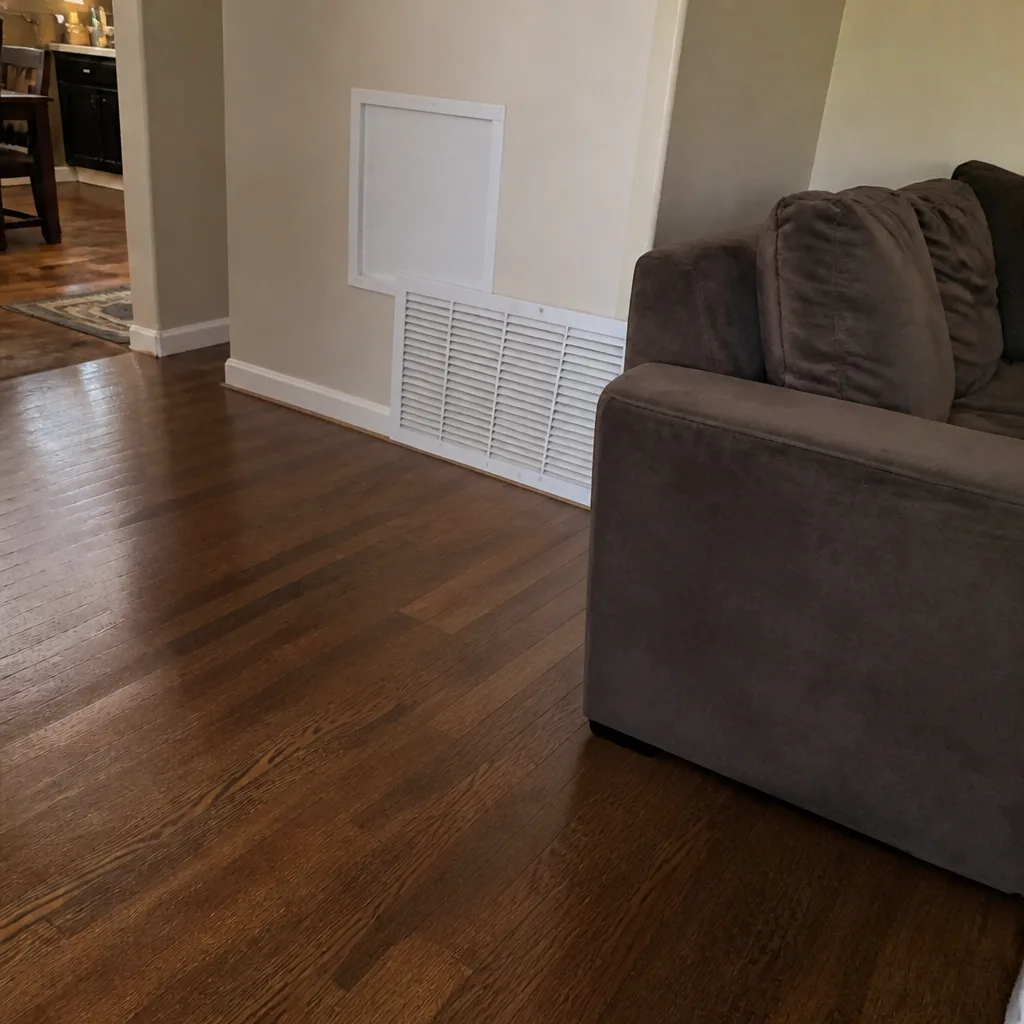 After
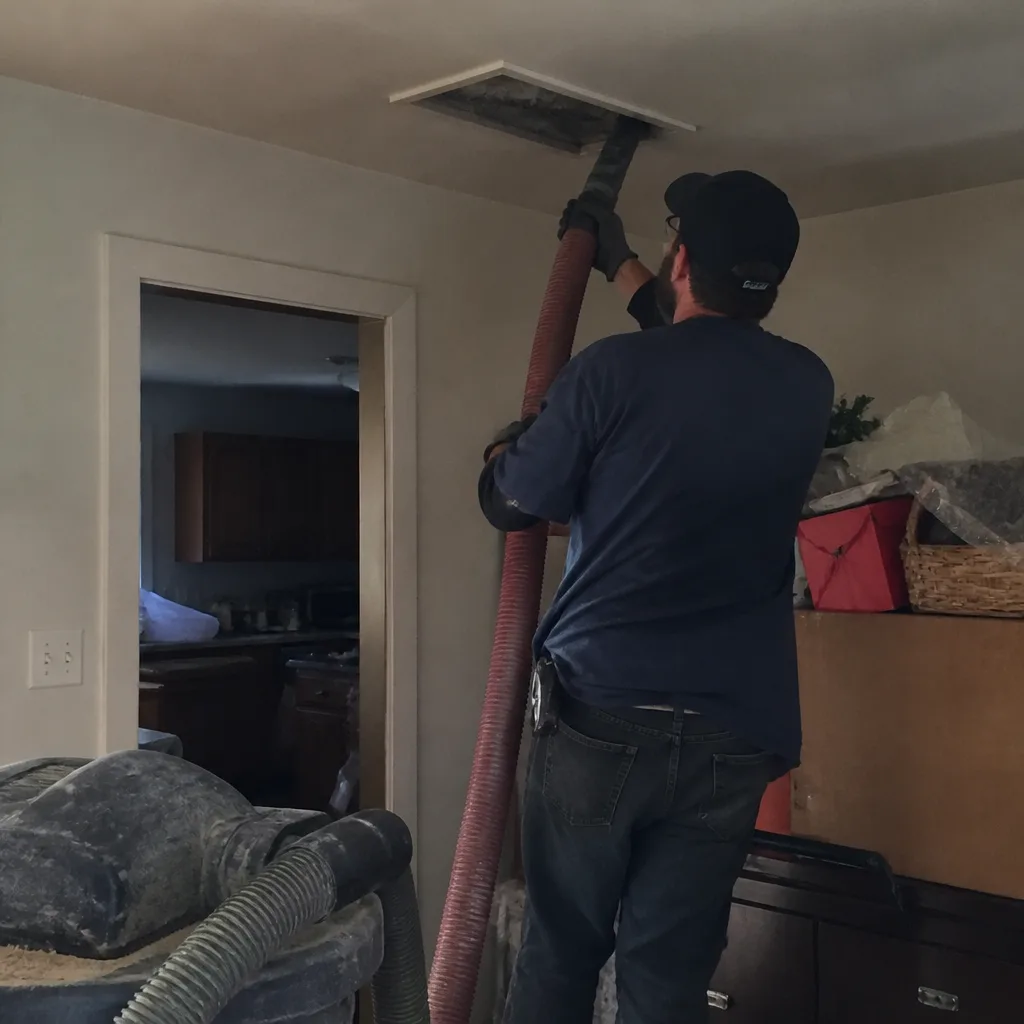 Before
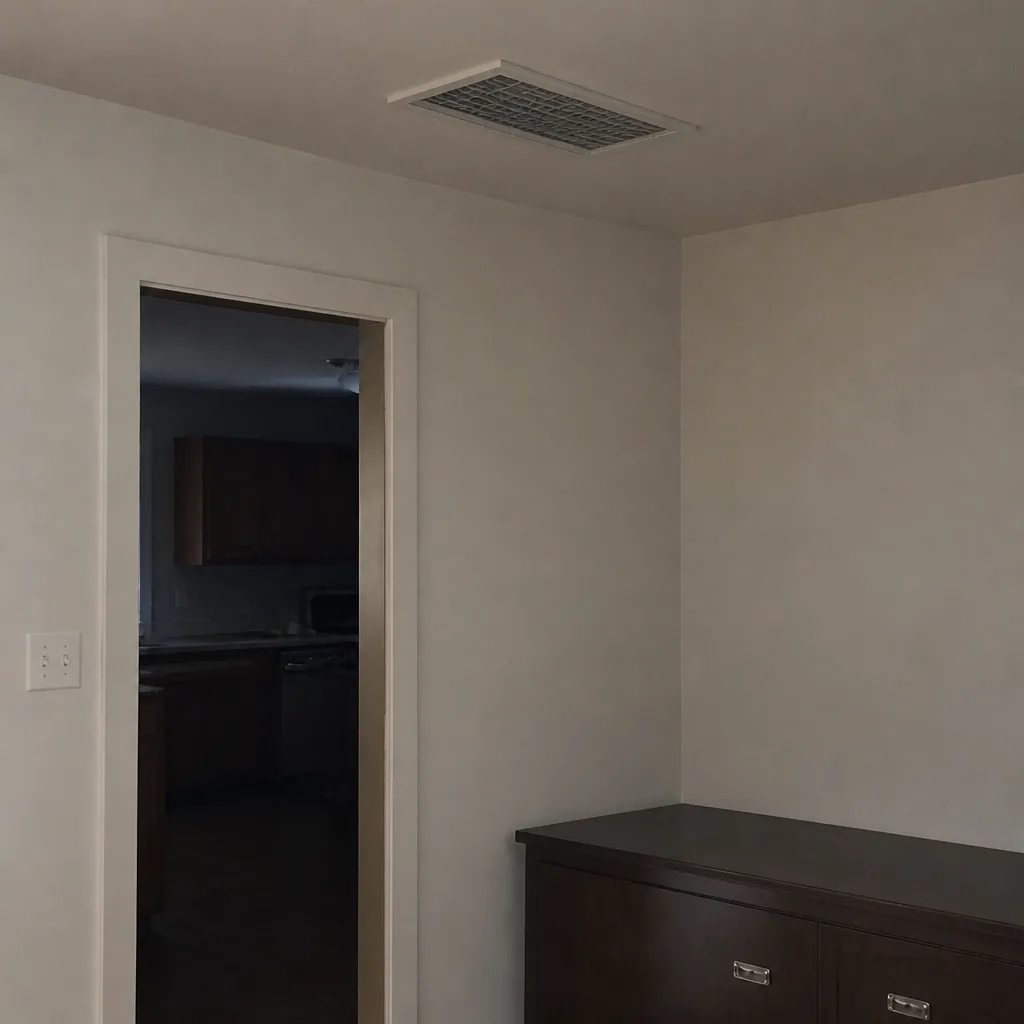 After
 Before
 After
When to Call a Professional
Some duct conditions are worth a call regardless of how long it’s been since the last cleaning. If you’ve recently completed a renovation or remodeling project, construction dust gets pulled into the return and ends up spread through every run in the house. If you’ve moved into a home in Holladay and aren’t sure when the system was last cleaned, an inspection is worth the call. If anyone in the household has been noticing allergy symptoms or persistent dust buildup in rooms that haven’t changed usage, the system is the first place to look. And if the dryer is taking longer than usual to dry a load, or the dry vent flap outside isn’t opening cleanly, get that checked soon.
Holladay Air Duct Cleaning offers free estimates in Holladay, so it costs nothing to have a technician look at the system and tell you what it actually needs. Call (844) 569-6978. We answer 24/7. Fast dispatch from 7am to 7pm, Sunday through Friday.
Frequently Asked Questions
Most whole-house duct cleanings fall in the range a qualified contractor can estimate only after walking the system, because home size, duct layout, contamination level, and whether repair or sealing is needed all move the number. This is a flat price per system, not a per-vent price, and the final figure is set by the written estimate before any work begins. Call (844) 569-6978 for an exact quote; estimates are free.
We recommend being present for the walkthrough so you can see the access points, review the scope, and ask questions before work starts. After that, most homeowners stay for the visit but aren’t required to be in the room. The important thing is the walkthrough, because that’s where the scope and price are confirmed.
Cheap quotes are cheap for structural reasons: the teaser price is set below the actual cost of a proper job on purpose, knowing the real invoice gets assembled in your basement. The low price doesn’t include equipment sized for the home, documented findings, or before-and-after photos, because delivering those things costs real money. A flat price per job that can actually be delivered is the honest comparison, not the headline number in a flyer.
Before-and-after photos of your own ductwork are the proof. A professional contractor photographs the same access points on both sides of the cleaning, and those images should be visibly different. Written findings that describe what was found and what was done back the photos up. Ask for both before you book.
There’s no universal schedule. Homes with pets, recent renovations, ongoing allergy concerns, and older systems with more complex ductwork tend to need cleaning more often than newer, simpler systems. The honest answer is to have the system inspected and cleaned when the condition warrants it, not on a fixed number printed on a coupon.
Yes, because Utah doesn’t require an air duct cleaning license, so membership is the closest thing to a meaningful credential. NADCA membership signals a commitment to industry standards for inspection, source removal, HVAC protection, documentation, and trained technicians. You can verify membership in three minutes through the NADCA directory, and fewer than a dozen companies in Salt Lake County currently hold it.
The Bottom Line
Hiring an air duct cleaning contractor in Holladay is a vetting exercise, not a shopping exercise. Utah’s lack of a specialty license means your protection comes from the questions you ask and the documentation you require. Ask the four equipment questions, confirm NADCA membership in the directory, and reject any pricing structure that only makes sense if the final invoice gets built on-site. Expect a walkthrough with access point identification and before-photos, expect a written scope at a flat price, and expect before-and-after photos and written findings when the job is done. A contractor who provides all of that is the one to hire. A contractor who can’t is a coupon waiting to become an invoice. Call (844) 569-6978 for a free estimate. We answer 24/7. Fast dispatch from 7am to 7pm, Sunday through Friday.
Written by the team at Holladay Air Duct Cleaning.