
Last updated November 24, 2026
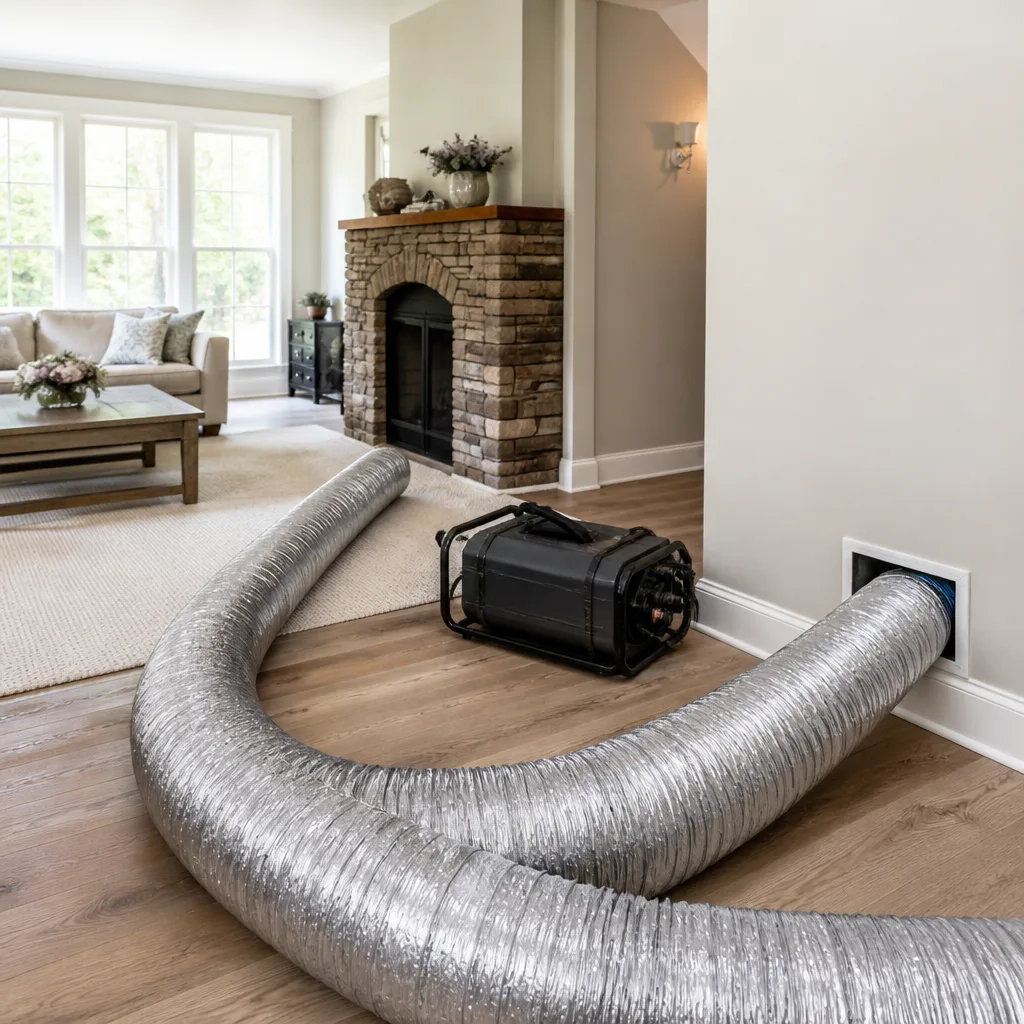 Whole-home duct cleaning
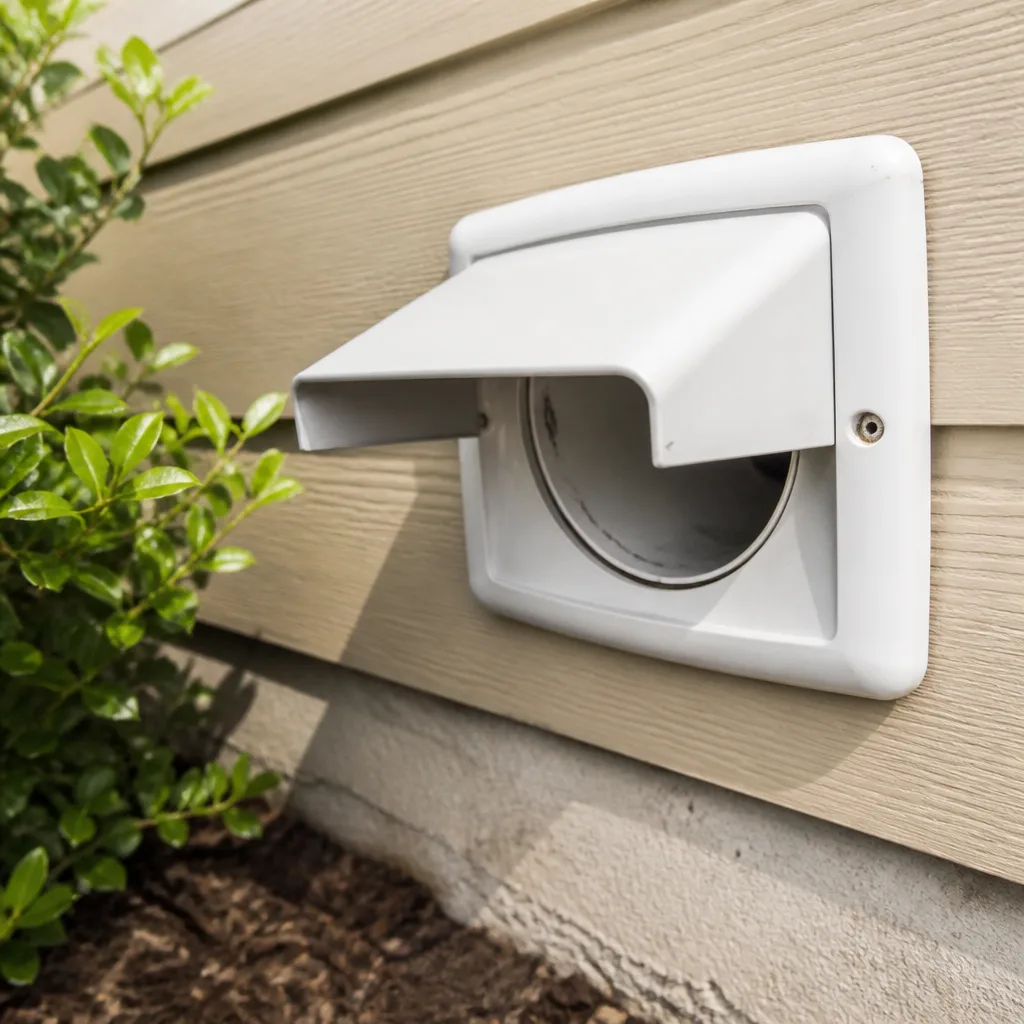 Dryer vent cleaning
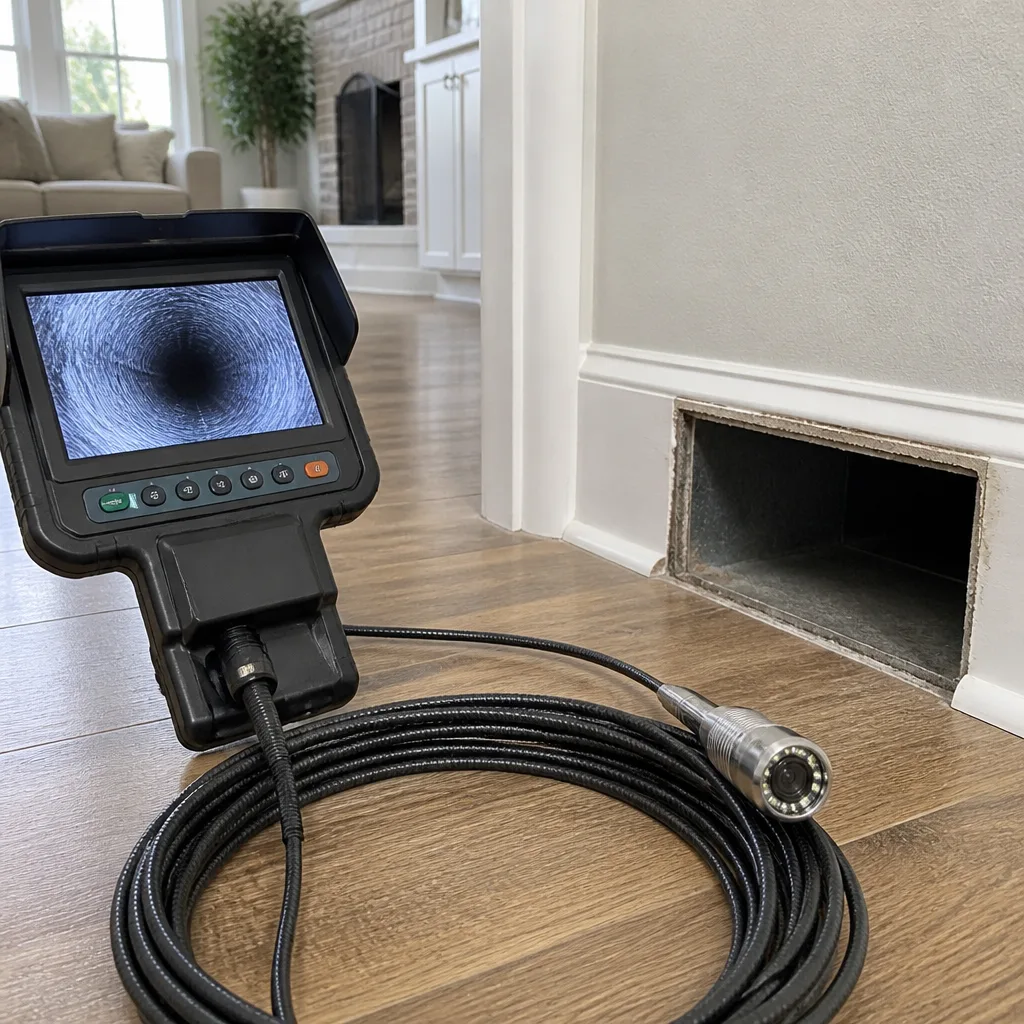 Camera inspection
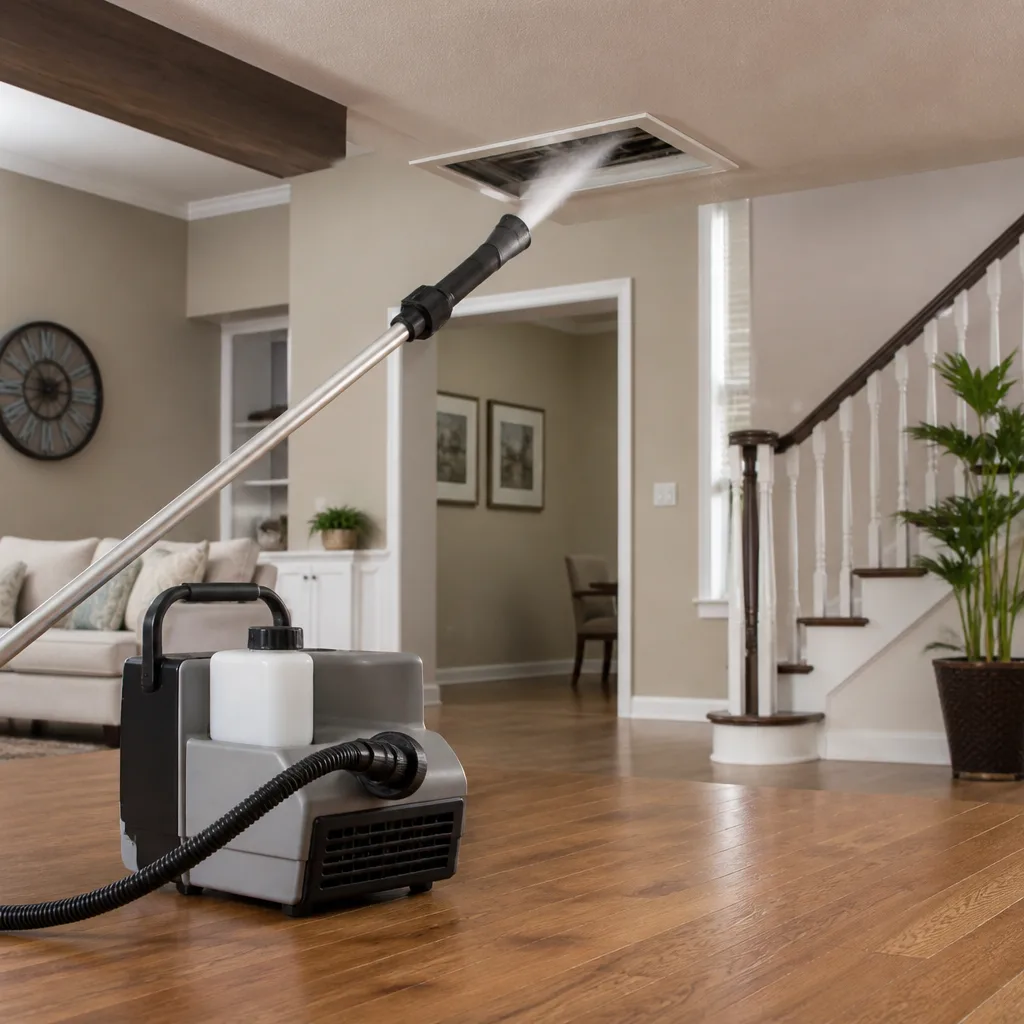 Sanitizing & deodorizing
Whole-system duct and dryer vent check with before-and-after photos - you see exactly what came out of your vents
That "$99 whole-house special" is a bait ad - the real number appears once they are in your hallway, or the "clean" is a shop-vac at the register. We photograph the inside of your ducts before and after instead.
Choosing the Right Air Duct Cleaning Brand: A Buyer’s Guide for Holladay
Here’s the part of the air duct cleaning market that surprises people: a recognizable franchise name on the side of the truck tells you almost nothing about what’s inside the truck. Several of the most advertised national names operating along the Wasatch Front run the same portable vacuum rigs as the independent operator working alone in the valley. The franchise fee buys marketing and a logo, not necessarily better machinery. What actually matters is whether a company’s equipment, technician training, and service scope match the specific system in your Holladay home. This guide gives you a way to audit that, using questions you can ask on the phone before anyone arrives.
Quick Answer
Choose an air duct cleaning company in Holladay by auditing its equipment and scope, not its branding. Ask what vacuum system it uses (truck-mounted or high-powered portable HEPA), how it drives the brushes (rotary brush versus air whip), and whether it can quote duct sealing, coil cleaning, and dryer vent service from the same crew. A company that answers these specifically and can handle the whole air pathway is the one worth a written estimate.
Styles & brands we work with
- Whole-home duct cleaning
- Dryer vent cleaning
- Camera inspection
- Sanitizing & deodorizing
Table of Contents
- How to Audit a Company’s Actual Equipment
- Franchise vs. Independent vs. HVAC Company with Duct Service
- Is Duct Cleaning a Core Service or an Add-On?
- Reputation Signals That Matter in a Small Market Like Holladay
- The Service Scope Test
- What Holladay’s Climate and Housing Do to Your Ducts
- Questions to Ask Before You Book
- What a Real Whole-System Job Involves
How to Audit a Company’s Actual Equipment
Equipment is the one part of the brand decision you can verify with a phone call. The rest of the guide builds on it. Here is the audit, in plain terms.
Start with the vacuum. Duct cleaning is only effective if the vacuum pulls a strong, sustained negative pressure on the system while the brushes agitate the debris loose. Two broad classes of machine do this: truck-mounted vacuums with large hoses, and portable high-powered units built with HEPA filtration. Both can work. What you’re trying to avoid is a shop-vac-tier machine that lifts little more than what’s within a foot of the register. Professional-grade equipment builds in the airflow and filtration to move material through a long duct run and trap it, rather than just stirring it up.
Next, ask about the brushes. The two common approaches are rotary brushes (spinning bristle heads driven down the duct) and air whips (compressed air that lashes the duct walls). Rotary brush systems are generally able to scrub caked-on deposits on the duct floor, which a whip alone can dislodge but not fully remove. When we do duct cleaning in Holladay, we run Rotary brush systems from Rotobrush paired with Nikro HEPA vacuum equipment. These are the same categories of tools commercial contractors use, not rental-counter machines. That’s the standard you’re auditing against, regardless of whose logo is on the invoice.
The third piece is camera inspection. A technician who can show you real-time video of the inside of your ducts before and after gives you evidence, not a verbal promise. Ask whether they carry a camera system. If they do, ask for before-and-after photos of the work in your own home, not a generic brochure image. Legitimate crews are happy to share them.
- Ask precisely: “What vacuum system do you use – truck-mounted or portable HEPA?”
- Follow up: “Rotary brush or air whip? What brand of brush driver?”
- Ask: “Do you carry a duct camera? Will I get before-and-after photos of my own system?”
- Ask: “Is the filter HEPA-grade, and where does the filtered air vent?”
- Ask: “Will the technician seal off registers or use negative pressure to keep debris out of the living space?”
Franchise vs. Independent vs. HVAC Company with Duct Service
Once you know how to check equipment, the next question is what a business model tells you about training consistency and accountability. There are three common shapes in the Holladay market, and each has trade-offs.
Franchise. A national brand may standardize procedures across locations, which can mean consistent training for technicians. But the local operator behind the brand still owns the equipment, and equipment investment varies widely from one franchisee to another. The name travels; the tools don’t necessarily.
Independent. An independent company lives or dies on its local reputation, so accountability is often tighter – a bad job in Holladay gets talked about. The trade-off is that quality depends entirely on the specific operator. An independent running professional-grade tools and a full-service menu is often the strongest option in the market. An independent running a single portable unit is a different proposition. You can’t tell from the label; you have to ask the questions.
HVAC company offering duct cleaning. An HVAC company that adds duct cleaning to its menu has the advantage of understanding the whole mechanical system. The risk is that the duct service is a secondary line item and the investment in specialized duct equipment may be lighter than a dedicated specialist’s. That doesn’t mean they can’t do it well, only that you should ask the same audit questions and judge from the answers.
The takeaway: the business model is a starting point, not a verdict. The equipment audit and the scope test below do the real work. Our technicians have up to 13 years of experience, and in that time the pattern that’s held is simple. The companies that invest in specialist tools and staff training are the ones that stand behind the work when the job is complicated.
Is Duct Cleaning a Core Service or an Add-On?
You can usually tell whether a company treats ducts as a core service or an add-on just by reading the quote carefully. A core-service quote reads like a system description. An add-on quote reads like a coupon.
Five things separate them:
- System-specific line items. A core-service quote mentions the air handler, coil, return plenum, boots, and registers, not just “ducts.” An add-on quote names a number of vents and a flat price.
- Negative-pressure language. A specialist talks about how the vacuum is connected to the main trunk and how registers are sealed during cleaning. An add-on often skips this entirely.
- Before-and-after evidence. A specialist offers photos of your own ducts. An add-on tends to hand you a brochure.
- Discovery clause. A core-service quote accounts for what the technician may find – loose joints, disconnected runs, rodent intrusion – and tells you how repair is quoted separately. An add-on quote has no room for problems.
- Dryer vent and coil cleaning. A specialist can quote those in the same visit because the equipment and skills overlap. An add-on usually can’t.
One more check: ask how the technician disconnects and reconnects the air handler. If ducts are a core service, the crew is comfortable working around the furnace and coil and can do so safely. If ducts are an add-on, the answer often reflects a limited service envelope.
Reputation Signals That Matter in a Small Market Like Holladay
In a large metro, five-star reviews are noisy. In a market the size of Holladay, they carry more signal – but only if you read them for the right thing. A review that says a crew was “friendly and on time” tells you about customer service. A review that says a technician “showed before-and-after photos of our return vents and found a disconnected run feeding the upstairs bedroom” tells you about scope. Look for the second kind.
Three reputation signals to weigh:
- Scope-completion language. Reviews that mention specific fixes – resealed joints, cleaned coils, dryer vent lint removed, sanitizing after a renovation – are the ones that tell you the company delivers what it quotes.
- Follow-up on discoveries. Look for reviewers who mention that the company found a problem and fixed it during the visit, rather than handing off to a second contractor. Those reviews are the strongest indicator of a company that can do 360-degree work.
- Response to negative reviews. A technician team that responds to criticism with concrete process (not defensiveness) is a team that runs a process in the first place.
In Holladay, the neighborhoods around Olympus High, the older housing stock near Walker Lane, and the newer builds up toward Cottonwood all have different duct setups – and the reviews that mention the specific kind of system (flex duct, hard pipe, multi-return) will tell you more than any overall star count. Cross-check the online-review language against the equipment-audit answers you collect on the phone. If the reviews and the answers line up, you’re looking at an honest operation.
The Service Scope Test
A full-system indoor air specialist should be able to quote, from one crew and one visit, the following five services. Each one tests a different capability. If a company can’t do all five, ask yourself whether the one you need is really the one they do.
- air duct cleaning – the baseline. Whole-system contact vacuum plus agitation, with HEPA filtration.
- dryer vent cleaning – a safety service, not just a lint story. Dryer vents are a fire hazard when clogged, and a specialist treats them that way.
- HVAC cleaning – coil and air handler cleaning. A company that cleans ducts but not the coil isn’t cleaning the whole system.
- Duct repair and sealing. Finding a leak and fixing it the same visit prevents the re-contamination problem. A cleaning-only company can’t do this.
- Air quality treatment. Sanitizing, filtration, and product lines like Aprilaire and Honeywell for long-term indoor air quality.
The scope test is the single most reliable capability signal, because breadth requires investment. A company that stocks equipment for duct repair and air quality treatment has chosen to carry the cost of doing more than cleaning. When we quote duct repair and sealing alongside cleaning in Holladay, it’s because the tools are on the truck for the trip and the technicians are trained to use them. A cleaning-only company would have to refer you elsewhere to seal what it found.
One earlier caution: scope isn’t the same thing as equipment. Do both tests. A company could theoretically quote all five services while running shop-vac-tier equipment. The equipment audit catches that.
What Holladay’s Climate and Housing Do to Your Ducts
Utah’s high desert and the mountain basin that surrounds Holladay create a specific pressure cycle in home ductwork that many homeowners underestimate. Two seasonal forces matter: summer and winter drying, and the wind-driven fine dust that comes across the valley during spring.
The dry air in summer and winter puts pressure on gaskets and mastic seals at duct joints. A home that ran fine in April can develop a whistle or a pressure imbalance by December as seals dry and shrink. That’s a sealing job, not a cleaning job. This is why duct repair and sealing is a standalone service, not an afterthought. A cleaning-only operation will move debris and leave the leak. A full-system specialist will find the leak during the visit and seal it.
The spring wind brings fine silt from the west-southwest that deposits on return grilles and, over time, builds up on the duct floor. That’s when you’ll notice dust on the intake side of the coil and filter-load pressure on the blower. Coil cleaning and filter inspection belong on the same visit as the duct cleaning, because doing one without the other leaves the source in place.
Older homes along the Sunset Drive and Olympus-area streets carry older duct designs too – undersized hard-pipe trunks with sheet-metal boots. Those systems benefit from camera inspection before cleaning, because a rotary brush run through a run that’s been partly disconnected can push material the wrong direction. Newer builds toward the Cottonwood neighborhoods are more likely to be flex duct, which calls for gentler brush speeds and more careful register sealing. A Holladay homeowner who knows their duct type can have a much more useful conversation with any company they call.
Questions to Ask Before You Book
Ten minutes on the phone with a specific list of questions will tell you more than any website. Here’s what to ask, in the order that surfaces problems fastest.
- What vacuum do you use, and what’s its airflow rating? Professional-grade units will happily quote the spec. Shop-vac-tier units dodge.
- What brush type do you run, and will the technician show me a camera inspection first? A rotary brush plus camera is the standard.
- Can you quote duct repair and sealing in the same visit if you find a problem? If not, you’ll be booking a second contractor.
- Will I get before-and-after photos of my own ducts? If the answer is vague, ask for a sample.
- Can you also quote dryer vent cleaning and coil cleaning? This tests the full-system capability.
- What does the written estimate cover, and is there one flat price per system agreed before work starts? The number that leaves the driveway should match the number on the invoice.
- Are the technicians who arrive the ones you train in-house? A rotating independent contractor list signals a dispatch model, not a training model.
The answers to questions four through six are in our view the sharpest test. A company that offers before-and-after photos, quotes by system, and can seal what it finds is the one that behaves like a specialist. If the local pro you book is licensed and insured as their state requires and can pass these questions, you’ve found a real one. Call (844) 569-6978 for an exact quote on your Holladay system. Estimates are free.
What a Real Whole-System Job Involves
When a company runs a full-system visit rather than a surface pass, the job has a beginning, middle, and end, and each stage has its own purpose. Knowing the sequence helps you judge whether the visit is being done properly.
Stage one: walkthrough and camera inspection. The technician walks the system – every register, return, and the air handler – and runs a camera to see what’s actually in place. This is when a disconnected flex run or a crushed boot shows up. The written estimate comes after this, not before.
Stage two: preparation. Registers are sealed with foam or plastic, negative pressure is established with the vacuum connected to the main trunk, and the living space is protected. This is where the difference between a specialist and an add-on shows: prep is where the care lives.
Stage three: agitation and vacuuming. The rotary brush driver runs from the trunk into each branch, loosening deposits back toward the vacuum. Air whips are used where the duct geometry calls for it. Contact vacuum alone doesn’t dislodge caked material; brush plus vacuum does.
Stage four: source cleaning and sealing. The air handler, blower, and coil get attention. Loose joints and any leaks found in stage one are sealed before the system is reassembled. If the customer opted for sanitizing after a renovation or an illness, that’s applied after cleaning, using guardsman-grade products that treat the surface and leave the system dry.
Stage five: verification. Camera again, photos back to the customer, and a walkthrough of what changed. A company confident in its work will show this without being asked.
When the crew runs this sequence in a Holladay home, the visit usually takes a full day for a mid-sized system. Faster means shorter stages, and shorter stages mean less gets done. See what’s in your ducts, then do something about it – that’s the only way the visit earns its place in your schedule.
Common Mistakes to Avoid
- Choosing on price alone. The lowest quote in the valley usually reflects the lightest equipment and the shortest visit. Both will be obvious when you look at what comes out.
- Skipping the equipment questions. A brand name is not a spec sheet. Ask what vacuum and what brush driver. In a Holladay market with a mix of specialists and add-ons, the answers differentiate.
- Booking a cleaning-only company for a leak. If your system has a disconnected run, cleaning it doesn’t seal it. You’ll re-contaminate as soon as you run the furnace. Find a company that can repair and seal the same visit.
- Not asking for before-and-after photos. A photo of your own ducts is evidence. A brochure photo is advertising. The gap matters on this kind of job.
- Ignoring the dryer vent. A dryer vent clog isn’t a minor inconvenience; it’s the lint fuel source behind dryer fires. Whoever cleans your ducts should be able to quote the dryer vent too.
- Assuming “HVAC company” means duct specialist. An HVAC tech with a duct cleaning add-on may know furnaces well and ducts lightly. Ask about the equipment anyway.
- Skipping the coil. Clean ducts feeding a dirty coil is a system that will re-contaminate fast. Full-system means full system.
See the difference
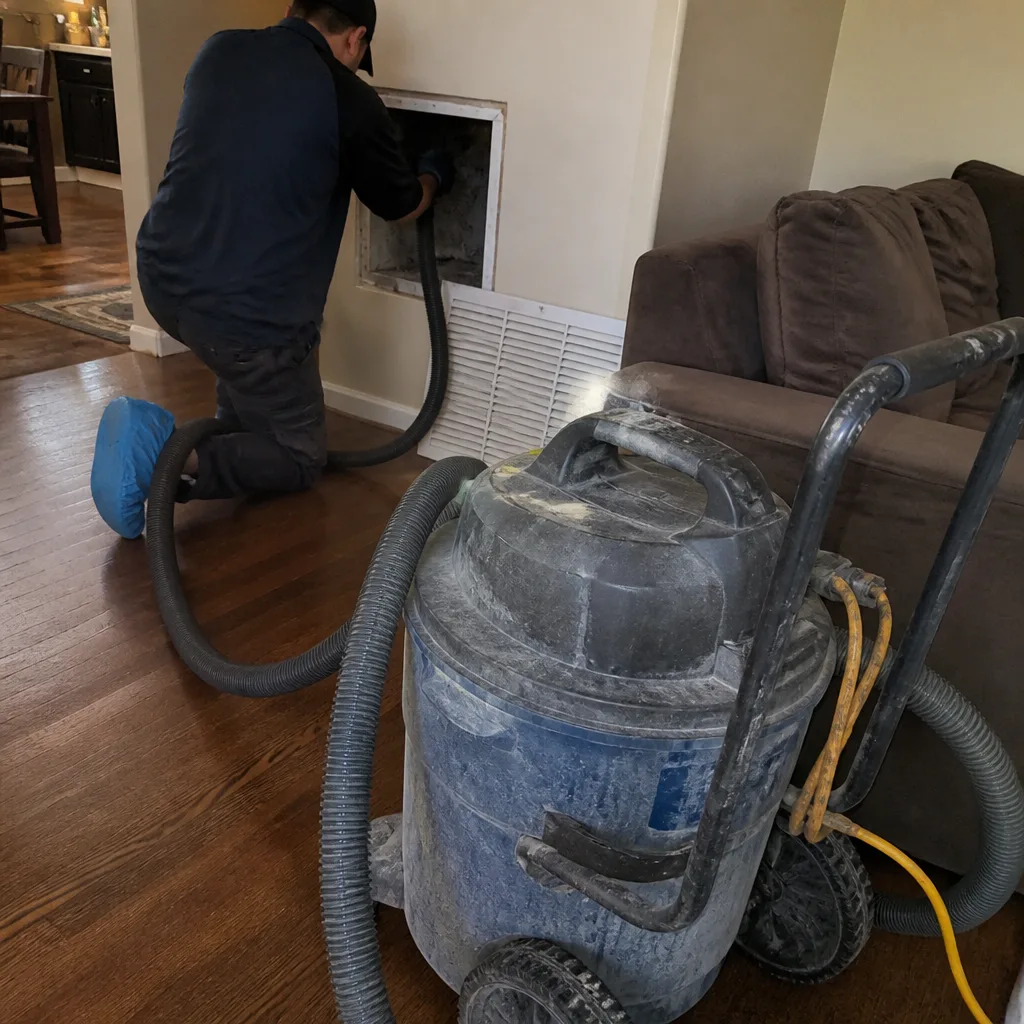 Before
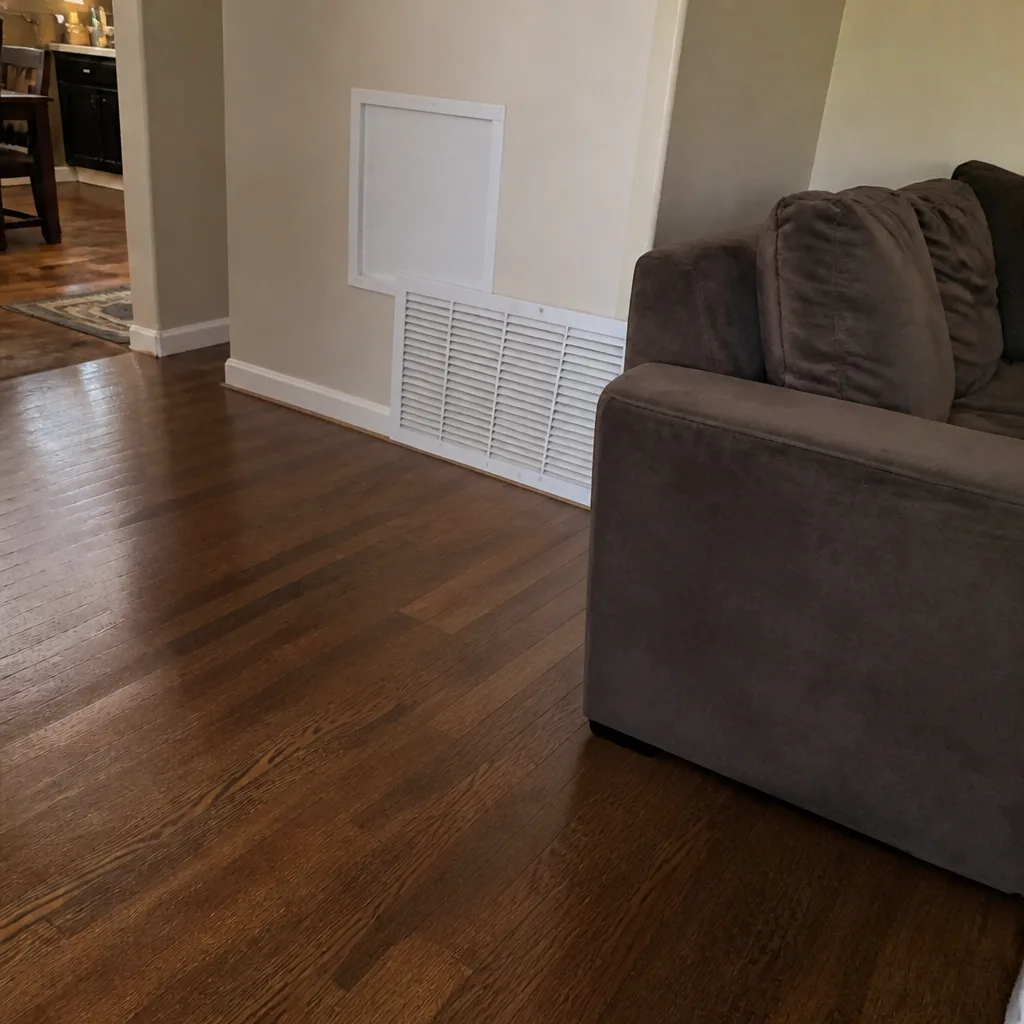 After
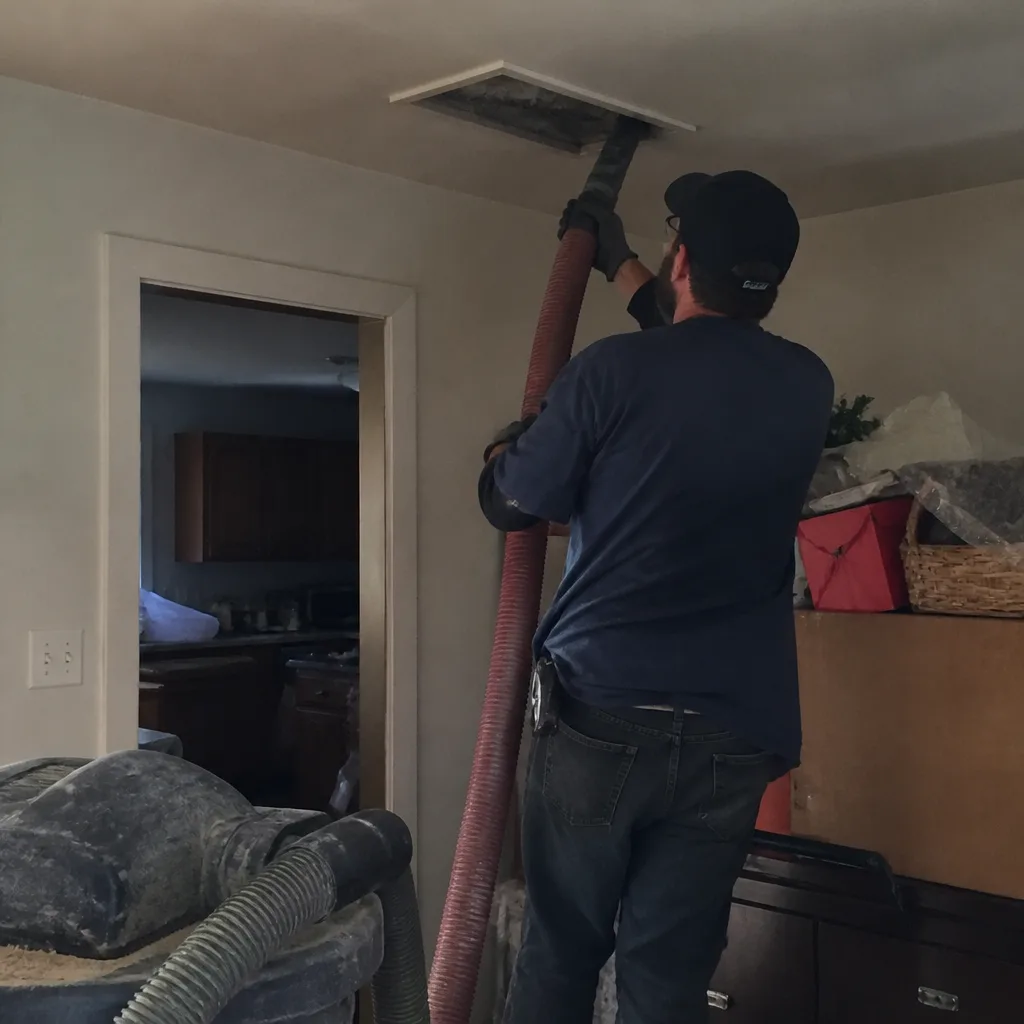 Before
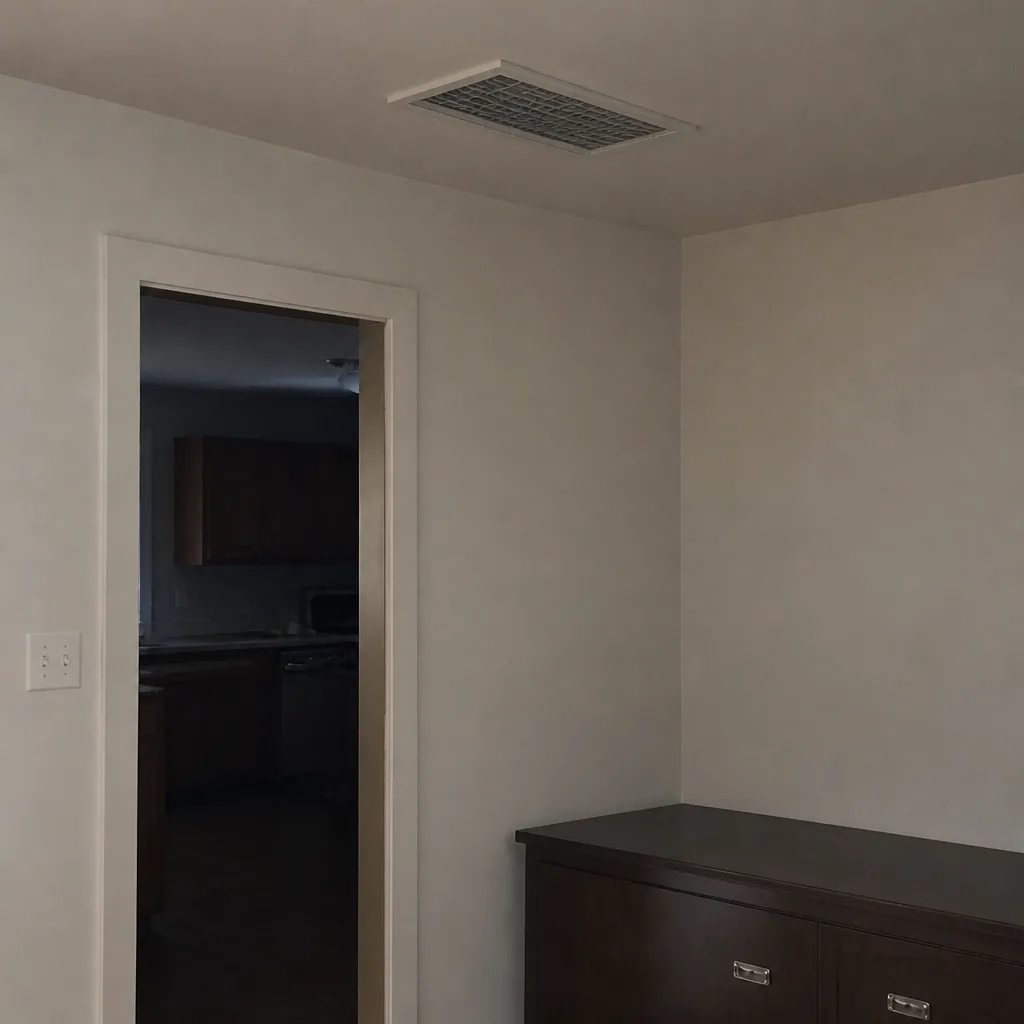 After
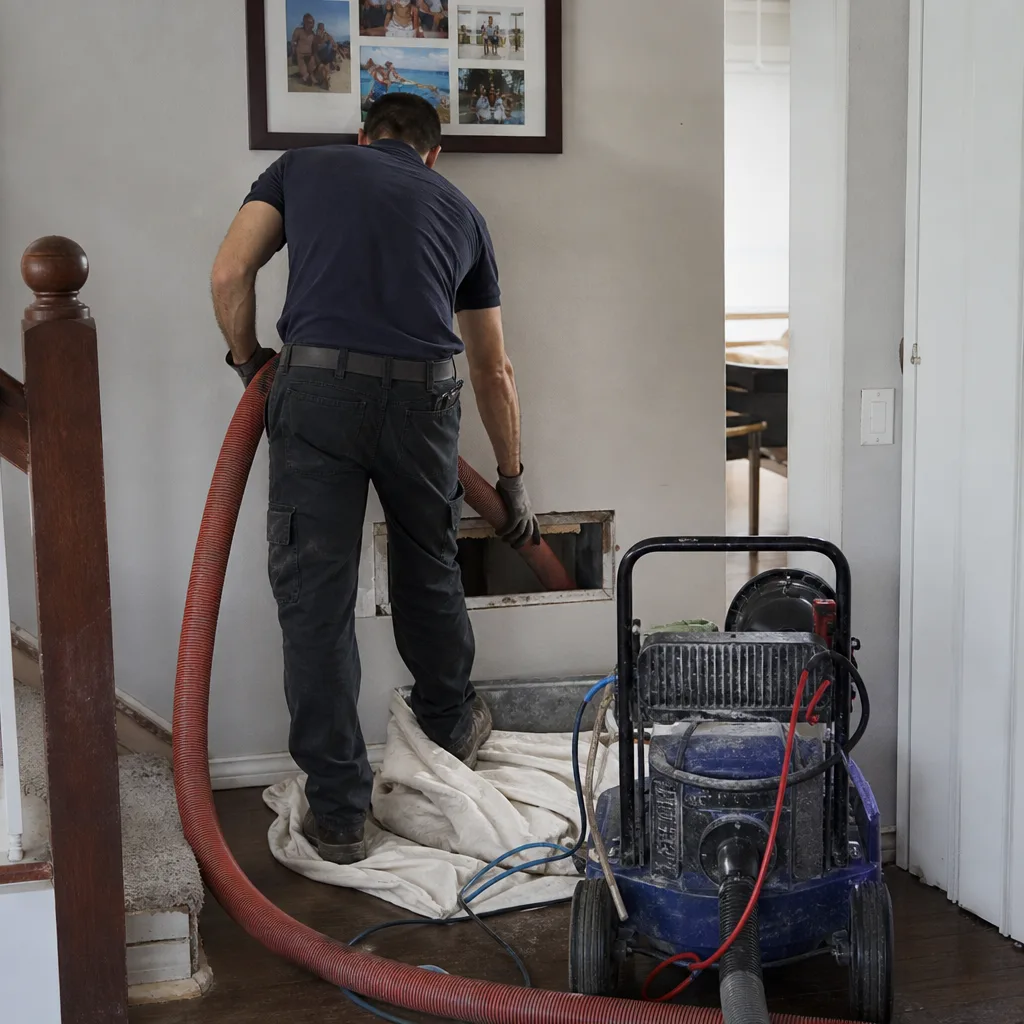 Before
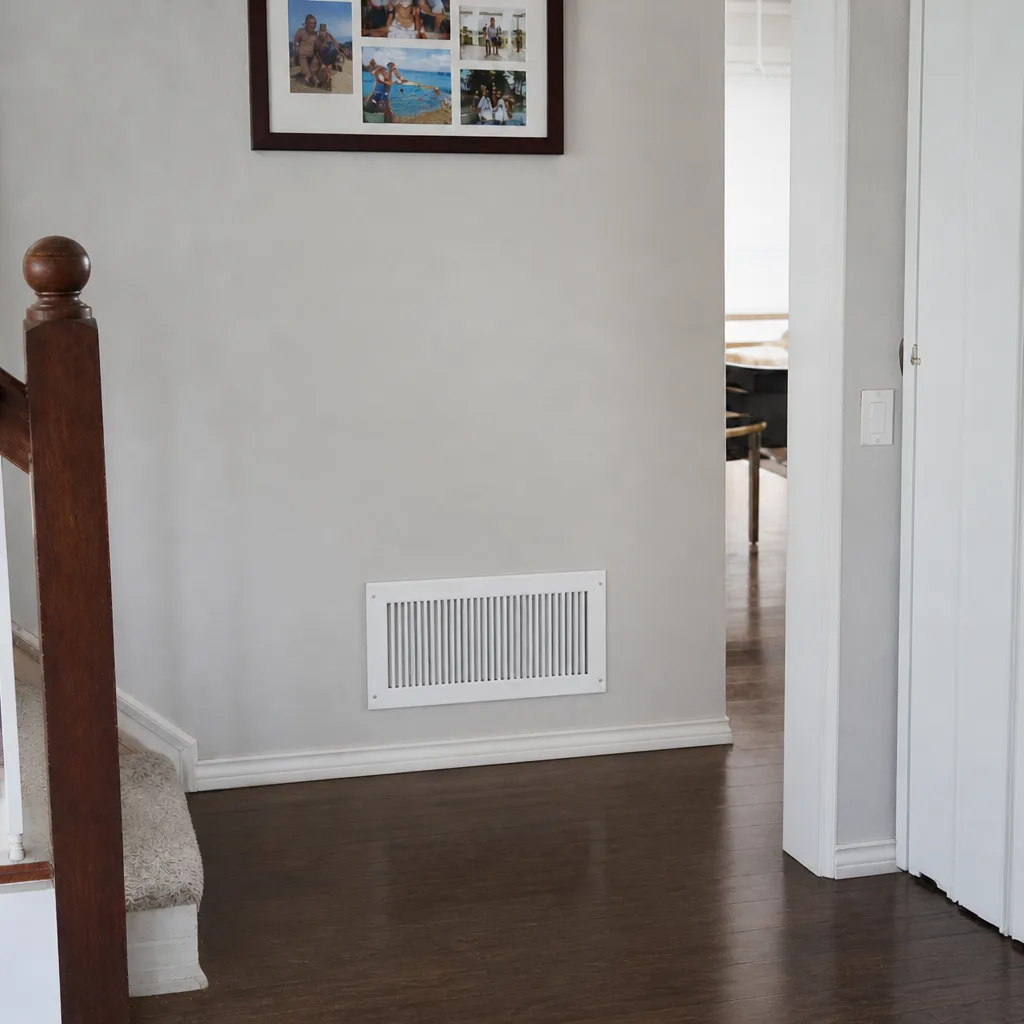 After
When to Call a Professional
Some duct problems are obvious from the house: a persistent dust film on the supply registers, a musty smell that comes on when the heat kicks in, a whistling sound at a return that wasn’t there last season, or a dryer that takes two cycles to dry a load. Others are invisible until inspection: a disconnected flex run in the attic, a crushed boot behind drywall, or a leaky trunk joint that’s been losing half your supply air into the crawl space. If you’ve had a renovation, a rodent problem, or a sick family member with worsening respiratory symptoms, a full-system inspection is worth booking. Holladay Air Duct Cleaning offers free estimates in Holladay – call (844) 569-6978. We answer 24/7. Fast dispatch from 7am to 7pm, Sunday through Friday.
Frequently Asked Questions
Most residential air duct cleaning in the Holladay area falls in the range of a few hundred to roughly a thousand dollars, depending on the number of registers, the size of the system, and whether duct repair, coil cleaning, or dryer vent service is added. The written estimate sets the final price, and every visit is quoted as one flat price per system before work starts – not per vent, not with a teaser coupon. Call (844) 569-6978 for an exact quote – estimates are free.
Cheap quotes usually reflect lighter equipment and a shorter visit. A company running a portable unit with no camera inspection can’t see what it’s cleaning, and a company quoting a single number per vent has no room for repairs. When a job is priced as one flat price per system with before-and-after photos included, a low coupon price is almost always going to become a bigger invoice on site. Call (844) 569-6978 to book a properly quoted estimate – estimates are free.
Ask for before-and-after photos of your own ducts, not stock images. A camera inspection before cleaning and again after is the standard evidence a professional crew will provide. If you’re told “we don’t take photos,” that’s a signal to re-run the equipment audit. Call (844) 569-6978 and we’ll walk you through what a Holladay job includes – estimates are free.
For most Holladay homes, every three to five years is a reasonable interval. Homes with pets, recent renovation, or a history of rodent intrusion should be inspected more often. The right answer is really “when inspection shows it’s needed,” which is why a camera check during the estimate matters more than a calendar rule. Call (844) 569-6978 for a free assessment of your system.
Ask about the vacuum (truck-mounted or high-powered portable HEPA), the brush drive (rotary versus air whip), and whether the crew carries a camera inspection system. We run professional-grade Rotobrush rotary-brush systems with Nikro HEPA vacuum equipment, and we use Abatement Technologies filtration on jobs that call for a higher level of air quality control. Call (844) 569-6978 to talk through your Hollyday system – estimates are free.
A genuine full-system specialist should be able to quote duct repair and sealing in the same visit as the cleaning. A cleaning-only company will hand off to a second contractor, which means a second trip and a second invoice. We do the repair, sealing, and cleaning in one visit. Call (844) 569-6978 for a free Holladay estimate.
The Bottom Line
Choosing a duct cleaning brand in Holladay isn’t about picking a logo. It’s about running a short capability audit: ask about the vacuum, the brush, and the camera; read reviews for scope language, not friendliness; and test whether the company can quote duct sealing, coil cleaning, dryer vent, and air quality treatment from one crew. A company that passes all three is the one that will actually clean your system. A company that dodges the equipment questions is a marketing operation. Whichever way you end up booking, ask for before-and-after photos of your own ducts, and insist on one flat price per system agreed before the work starts. That’s the standard you’ve earned the right to hold any company to.
Holladay Air Duct Cleaning is your Holladay Air Duct Cleaning full-system specialist, handling air duct cleaning, dryer vent cleaning, HVAC cleaning, duct repair and sealing, and air quality and sanitizing. We run professional-grade Rotobrush and Nikro equipment, work with Honeywell and Aprilaire product lines, and can quote the whole air pathway in one visit. Better air starts at the source. Call (844) 569-6978 for a free estimate. We answer 24/7. Fast dispatch from 7am to 7pm, Sunday through Friday.
Written by the team at Holladay Air Duct Cleaning.